Few places on Earth feel as solitary as Easter Island. Over 3,000 kilometers separate it from the South American continent, and another 3,000 stretch to Tahiti, the nearest major inhabited island. Known to its original settlers as Rapa Nui, this volcanic speck in the Pacific has captured imaginations worldwide thanks to its mysterious guardians: the Moai, colossal stone figures scattered across its windswept terrain.
Roggeveen’s Arrival
On Easter Sunday, April 5, 1722, Dutch explorer Jacob Roggeveen first set foot on the island. Searching for the mythical Terra Australis, he instead found towering statues and two distinct groups of inhabitants: Polynesians and the so‑called “Long‑Ears.” Roggeveen’s discovery did not earn him acclaim back home—he was mocked for failing to find the southern continent. Yet his voyage ensured that Easter Island was placed firmly on the world’s map.
The Moai and the Ancestors
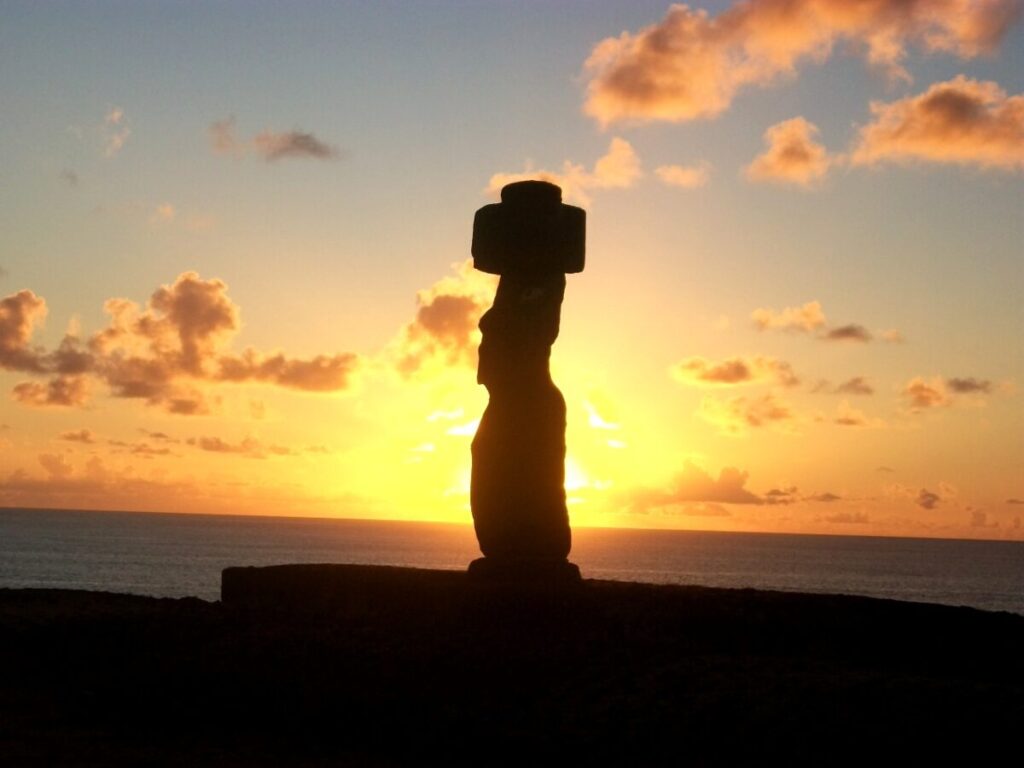
To carve a face from stone is to carve eternity. The Moai are not monuments—they are voices of the ancestors, lifted against the wind, standing as bridges between the living and the dead.
Centuries before Roggeveen, Polynesian navigators had crossed the Pacific in simple wooden canoes, guided by bird migrations and the stars, until they reached this “great rock.” Here they carved and raised the Moai, monumental figures that embodied ancestral power.
The most striking site is Ahu Tongariki, where 15 statues stand in solemn formation against the ocean backdrop. These platforms, or ahu, were sacred ground, places of ancestor worship. The cult of the Moai flourished for centuries before collapsing abruptly in the 17th century. How the islanders transported these massive figures remains a mystery—most theories suggest wooden rollers, which may explain the island’s deforestation.
Preserving the Past
What survives is not just stone, but pride. To stand before the Moai is to stand before resilience—the refusal of memory to vanish, the insistence of culture to endure.
Many statues were toppled or destroyed in later centuries, yet much has survived. Today, the people of Rapa Nui take immense pride in their heritage. Visitors are expected to treat the Moai with respect: the platforms are sacred, and stepping onto them is forbidden. Standing face‑to‑face with these immense figures is a humbling experience, a reminder of human ingenuity and spiritual devotion.
Rapa Nui Today
Annexed by Chile, Easter Island’s population is a blend of descendants of the original Polynesian settlers and mainland Chileans. Many young islanders study in Chile, yet return for festivals and family ties. Modernity has reached Rapa Nui, but the community works hard to keep its traditions alive.
The most vivid expression of this cultural pride is Tapati, a week‑long festival held each February. Two teams compete in traditional skills—canoeing, fishing, weaving, and more—while evenings are filled with dance, song, and fashion shows featuring ancestral attire. Each team is represented by a candidate for “Queen of Rapa Nui,” a title that carries honor for the year. Tapati is both celebration and reclamation: a living testament to the island’s resilience and identity.
Rapa Nui is more than its statues. It is a story of endurance—of a people who crossed oceans, carved giants from stone, and continue to celebrate their heritage against the odds. To walk among the Moai is to step into a dialogue between past and present, solitude and community, stone and spirit.