






Rio de Janeiro dazzles the world with its golden beaches, carnival rhythms, and the watchful gaze of Christ the Redeemer. From the statue’s lofty perch, the city unfurls like a dream—green hills tumbling into the Atlantic, samba beats pulsing through its veins. Yet beyond the iconic postcard lies a quieter enchantment: the hillside neighborhood of Santa Teresa, Rio’s bohemian soul.
A Village of Villas
In the 19th century, as Brazil’s coffee fortunes blossomed, Rio’s elite sought refuge from the bustle below. They built grand villas and mansions on a hill crowned by a convent founded in 1750, christening the district Santa Teresa. For a time, it was a picturesque enclave, a “village above the city.” But prosperity proved fleeting. Within decades, the wealthy fled, and the neighborhood became hemmed in by expanding favelas, its grandeur shadowed by poverty and crime.
The Artist’s Revival
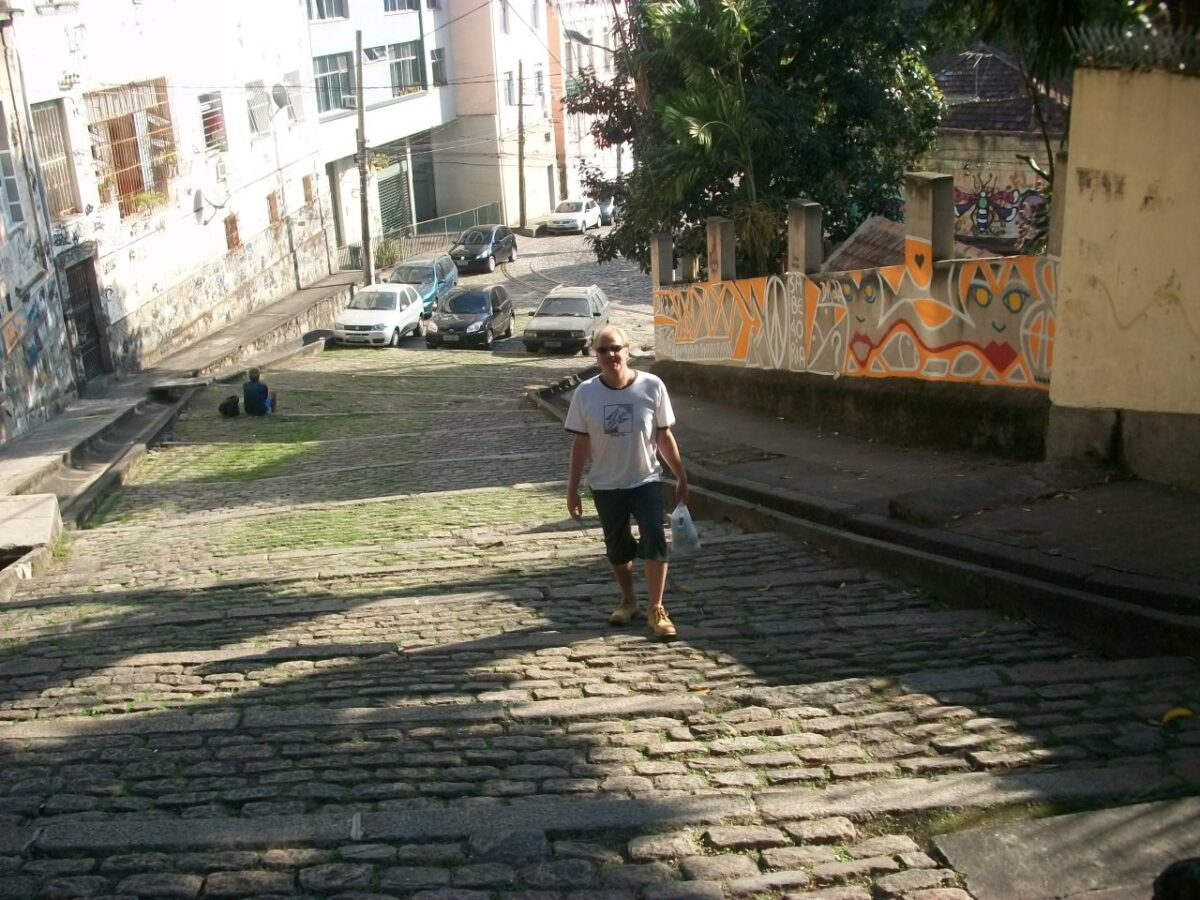
Walk today along Santa Teresa’s steep, cobblestoned lanes and you still feel echoes of its past. Some mansions stand in romantic decay, ivy curling over crumbling walls. Others have been reborn as boutique hotels, cafés, and ateliers. In the 1960s and 70s, artists claimed the district, transforming it into a creative sanctuary. Their presence revived the neighborhood, and Santa Teresa began to breathe again—graffiti blossomed across walls, studios opened their doors, and the area earned its nickname: the Montmartre of Rio. Today, walking Santa Teresa’s steep, winding lanes feels like stepping into a living gallery. Ivy curls over crumbling walls, stairways are mosaicked with color, and every corner hums with artistic energy.
The Tram in the Sky
When I first visited Santa Teresa the neighborhood was still linked to downtown by a tram that rattled across a former aqueduct before zigzagging up into the district. The ride was spectacular—an airborne journey into another world. Not long after my visit, a tragedy took place. The tram derailed, claiming lives and halting service for quite some time. Though most of the main route is restored, the most notable difference is a strict shift from a local “hop-on, hop-off” utility to a tourist experience with enhanced safety rules.
A Neighborhood of Contrasts
Santa Teresa is a place of contrasts—decay and rebirth, history and art, silence and samba. It is Rio seen from another angle: not the glitter of Copacabana nor the grandeur of Christ the Redeemer, but a hillside village where creativity thrives amid cobblestones and murals. To wander here is to glimpse Rio’s bohemian heart, beating quietly above the carnival roar.