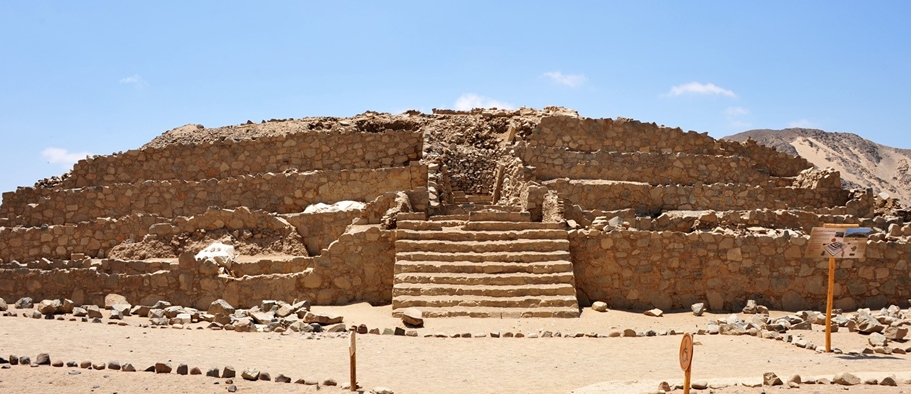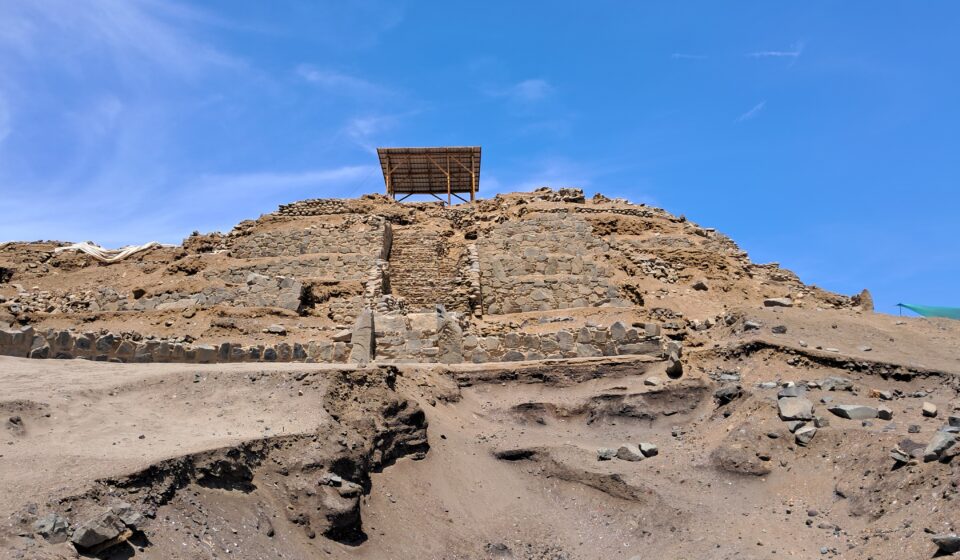
For decades, the ancient mounds of Áspero lay buried not under reverence, but under refuse. The cradle of one of the Americas’ earliest civilizations was used as a dumping ground, its sacred architecture hidden beneath layers of garbage. Yet when archaeologists finally brushed away the debris, they uncovered not only stone walls and ceremonial platforms but also the forgotten heartbeat of a society that thrived five millennia ago. Áspero’s resurrection from waste to wonder is more than an archaeological recovery; it is a reminder that history, however obscured, insists on being heard.
Aspero, an ancient coastal complex in the Supe Valley of Peru and part of the Caral civilization on Peru’s coast, began its recovery led by Ruth Shady in the 1990s. Excavations revealed that Áspero was not just a neglected site but a crucial fishing and trading hub for the Caral civilization, with evidence of elite burials like the “Dama de los Cuatro Tupus” and complex exchange networks linking the coast to the Amazon.
Our guide, speaking in Spanish, recalls how the team had to clear the site by hand, removing mountains of rubbish piece by piece. “It was exhausting work,” he explains. “We couldn’t use machines; they might have destroyed the fragile structures hidden beneath the dump. So slowly, we cleaned until the excavations could begin.” He has been part of this effort for nearly twenty years, though he never formally trained as an archaeologist. “I grew up in the town nearby,” he says. “When I heard there was a chance to work here, I applied. Everything I know, I learned through practice.” With quiet pride, he shows us photographs from past digs with his colleagues—images of discoveries that include human remains, tangible echoes of the ancient lives once lived here.
During the one-hour walk under a burning sun, our guide told us a lot about the history and significance of Aspero.
Áspero and Caral: Coastal Elder, Inland Sibling
Aspero functioned as the maritime counterpart to the inland ceremonial city of Caral. Archaeologists consider Áspero part of the Caral-Supe civilization and its principal port, where fishing, shellfish gathering, and maritime trade supported the broader urban and agricultural systems centered at Caral.
Radiocarbon whispers place its occupation as early as 3000 BCE, suggesting that the coast may have been the elder sibling in this ancestral family.
Together they form a dialogue: Áspero, the coastal elder, whispering to the tides; Caral, the inland sibling, answering with stone and ceremony. Neither stands alone. Their stories are braided into one fabric, proof that civilization was born not in isolation but in reciprocity.
In Áspero’s story we glimpse the beginnings of organized life, a reminder that civilization is born not only from stone, but from the patient weaving of community.
Location and Landscape
Áspero sits on the Pacific littoral near the mouth of the Supe River, a short distance from the monumental mounds and plazas of Caral. Its coastal position gave its inhabitants direct access to rich marine resources and placed it at the intersection of sea, river, and valley ecosystems—an ideal setting for a society that combined agriculture with intensive fishing and coastal resource management.
Archaeological Significance and Key Discoveries
Áspero matters because it shows how early societies along Peru’s central coast were organized. Excavations have revealed platform mounds, houses, and evidence of specialized work tied to fishing and processing marine resources. These finds highlight how central the sea was to daily life and the economy of the Caral civilization. They also confirm that the Caral-Supe culture linked coastal production with inland farming in a coordinated system long before later Andean civilizations appeared.
Economy, Society, and Technology
Áspero’s economy blended fishing, shellfish gathering, and trade with crops from the Supe Valley, such as cotton. Archaeologists see this as proof of early specialization: coastal communities provided marine food and crafted goods, while inland centers focused on farming, administration, and building large monuments. Together, these regions formed a complementary network, showing that the Caral-Supe culture already had strong social organization and long-distance coordination.