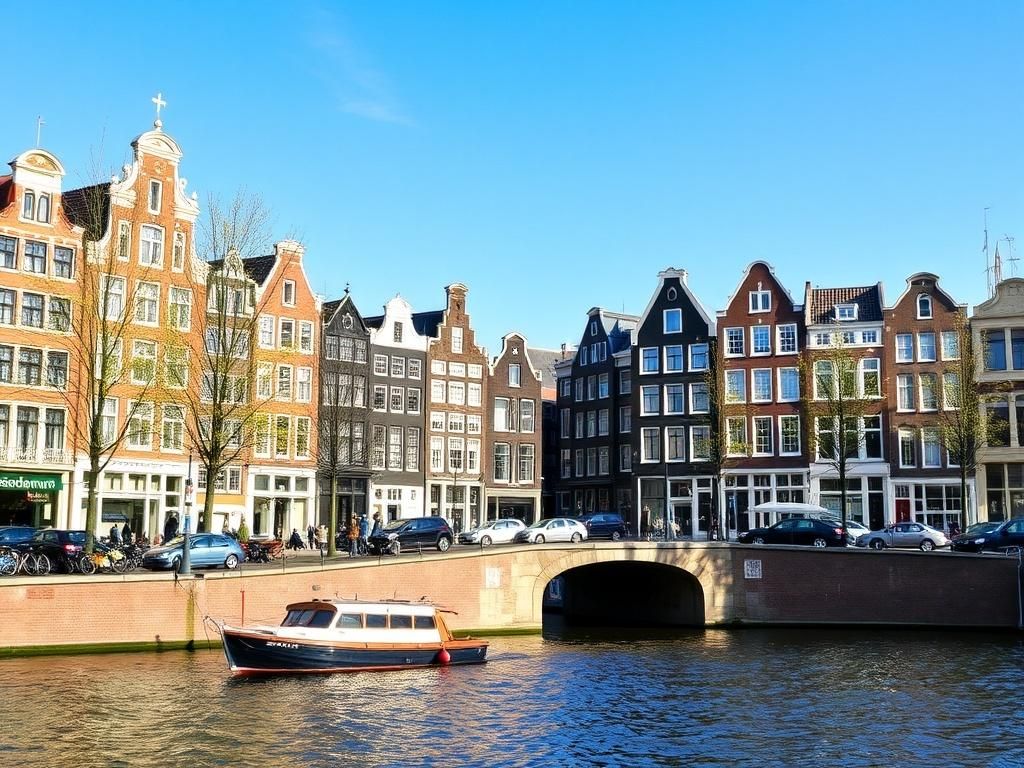
If you are planning a trip to the Netherlands, Amsterdam is likely your first stop—and for good reason. Its 17th-century canals and gabled houses are the stuff of postcards. But to truly understand the Dutch spirit, you must take the **40-minute train ride south to Rotterdam.
While Amsterdam is a preserved masterpiece of the past, Rotterdam is a laboratory for the future. Visiting both gives you a complete picture of a country that is as deeply rooted in history as it is obsessed with innovation.
The Ultimate Contrast: Old World vs. New World
Walking through Amsterdam feels like stepping into a Golden Age painting. The streets are narrow, the buildings lean at “charming” angles, and the pace is dictated by slow-moving canal boats.
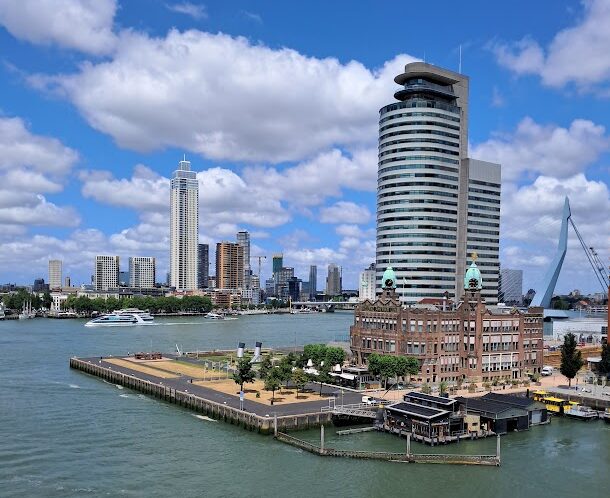
Rotterdam is the opposite. It is the only Dutch city with a true “Manhattan-style” skyline. Here, the streets are wide, the buildings are made of glass and steel, and the energy is industrial and experimental. If Amsterdam is a “museum city,” Rotterdam is a “living workshop.”
A Tale of Two Histories
The reason for this stark difference is both tragic and inspiring:
Amsterdam’s Preservation: During World War II, Amsterdam’s historic center remained largely intact. Its beauty today is a direct result of 400 years of continuous preservation. Rotterdam’s Rebirth: On May 14, 1940, the heart of Rotterdam was almost entirely flattened by the “Rotterdam Blitz.” After the war, rather than painstakingly rebuilding the old city (as many other European cities did), the people of Rotterdam made a bold choice: **they decided to build something entirely new.**
This “blank canvas” allowed architects to treat the city as a playground. The result is a skyline that looks like a 3D puzzle of geometric shapes.
Why It’s Worth the Trip
Rotterdam offers a “no-nonsense” vibe that locals call *Geen woorden maar daden* (No words, but deeds). It is less touristy than Amsterdam, more diverse, and feels like a city where people actually work and create.
What to See in Rotterdam
If you have a day or two to spare, these are the absolute essentials:
Markthal (Market Hall): A massive horseshoe-shaped building that combines a food market with apartments. The ceiling is a vibrant 11,000m² digital artwork known as the “Sistine Chapel of Rotterdam.” | Cube Houses : Bright yellow houses tilted at a 45-degree angle. They look impossible to live in, but you can tour a “Show Cube” to see how the furniture actually fits. Depot Boijmans Van Beuningen: The world’s first publicly accessible art storage facility. It’s a giant reflective “bowl” covered in mirrors that reflect the city skyline. Fenix Museum: a striking new cultural space dedicated to migration, located in front of the former departure point of the Holland-Amerika Line. It combines powerful exhibitions on global movement with bold architecture, including the iconic Tornado staircase by MAD Architects Erasmus Bridge | Nicknamed “The Swan,” this elegant suspension bridge is the symbol of the city and offers the best views of the Maas River. The Port of Rotterdam: Go on a harbor cruise or go on an amphibious bus . Seeing Europe’s largest port is the only way to understand the scale of Dutch global trade.
Getting There from Amsterdam
By Train: Take the *Intercity Direct* from Amsterdam Centraal. It takes roughly 40 minutes
By Bus: Some international busses going southwards to Belgium and France make a stop in Rotterdam
By Car: It’s about an hour’s drive, but parking in both cities is notoriously expensive!