

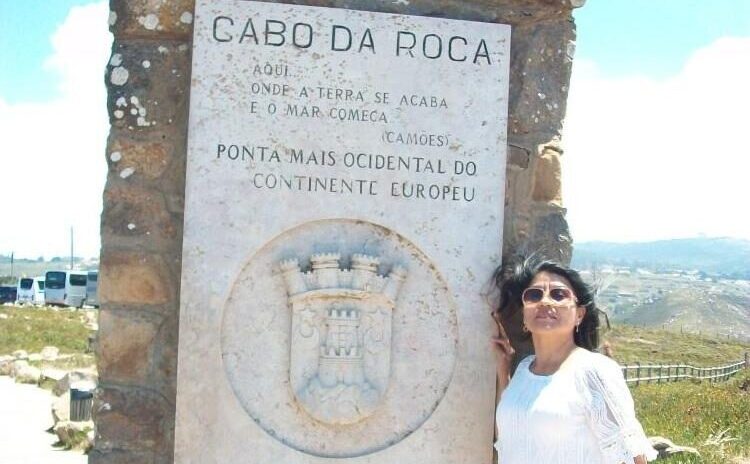
Standing on the edge of the known world, both Cabo da Roca in Portugal and The Cliffs of Moher in Ireland offer jaw-dropping views where the land meets the vast Atlantic Ocean. Yet, despite their shared oceanic backdrop, they represent two very different faces of coastal geology, history, and atmosphere.
While Cabo da Roca claims the title of the westernmost point of mainland Europe, offering a stark, sun-baked solitude, the Cliffs of Moher provide a dramatic, towering verticality that feels almost prehistoric. One is a point of navigation; the other, a fortress of nature.
Cabo da Roca: The Edge of Europe
Located roughly 42 kilometers west of Lisbon, Cabo da Roca is defined by its geographical significance rather than sheer vertical height. It is the point where the European continent physically ends and the Atlantic begins.
- **Geology:** The cliffs here are composed of **limestone and sandstone**, giving them a lighter, almost golden hue under the Portuguese sun. They rise about 140 meters (460 feet) above the sea. The terrain is rugged and windswept, often battered by strong Atlantic gales.
- Atmosphere: The vibe is one of solitude and endurance. It is a place of contemplation. The famous epitaph by Luís de Camões, “A terra termina, o mar começa” (The land ends, the sea begins), captures the melancholic beauty of the spot.
- Key Features:
- A lighthouse that has guided sailors since 1772.
- A stone monument marking the coordinates 38°46’51.0″N 9°30’02.0″W.
- Dramatic, jagged rock formations jutting into the water below.
The experience at Cabo da Roca is often about the wind. It is a place where you feel the raw power of the ocean crashing against a continental shelf, but from a more accessible, albeit steep, vantage point.
The Cliffs of Moher: The Titan’s Wall
Travel north to the west coast of Ireland, County Clare, and you encounter the Cliffs of Moher. These are not just a point; they are a spectacle of scale. Stretching for 14 kilometers, they are one of Ireland’s most visited natural sites.
- Geology: These cliffs are formed from sandstone and shale, creating a dark, layered appearance that contrasts sharply with the white foam of the Atlantic. They reach a maximum height of 214 meters (702 feet) at O’Brien’s Tower.
- Atmosphere: The mood is majestic and wild. The cliffs are a haven for seabirds, including puffins, guillemots, and razorbills, which nest on the ledges. The sound here is a constant roar of waves hitting the base, amplified by the sheer vertical drop.
- Key Features:
- O’Brien’s Tower, a round stone tower built in 1835, sits at the highest point, offering panoramic views.
- The Cliffs of Moher Heritage Centre, which provides educational context on the geology and wildlife.
- Dramatic sea stacks like the “Sugar Loaf” visible from the cliffs.
Unlike the singular point of Cabo da Roca, the Cliffs of Moher offer a long, linear journey. You can walk for miles along the cliff edge, feeling the ground tremble slightly with the force of the ocean below.
Head-to-Head Comparison
| Feature | Cabo da Roca (Portugal) | Cliffs of Moher (Ireland) |
|---|---|---|
| Claim to Fame | Westernmost point of mainland Europe | Highest cliffs in Ireland; UNESCO Global Geopark |
| Max Height | ~140 meters (460 ft) | ~214 meters (702 ft) |
| Geology | Limestone & Sandstone (Lighter, golden) | Sandstone & Shale (Darker, layered) |
| Primary Vibe | Solitary, navigational, windy | Dramatic, majestic, wildlife-rich |
| Key Landmark | The monument & Lighthouse | O’Brien’s Tower |
| Best For | Photography of the “end of the world” | Hiking, birdwatching, grand vistas |
| Weather | Generally sunnier, but very windy | Often misty, dramatic cloud cover, green surroundings |
The Atlantic Connection
Both locations share the Atlantic Ocean as their constant companion, but the ocean behaves differently against each coast.
At Cabo da Roca, the ocean feels like a vast, open frontier. The waves crash against a shelf that has been eroding for millennia, creating a sense of deep time and isolation. It is a place where sailors historically feared they had reached the edge of the world.
At the Cliffs of Moher, the ocean feels like a living, breathing entity. The mist from the spray often reaches the top of the cliffs, and the sheer volume of water hitting the base creates a mist that can obscure the view, adding a layer of mystery. The cliffs here are a barrier that the ocean has been trying to break for eons, resulting in a dynamic, ever-changing landscape.
Which Should You Visit?
- Choose Cabo da Roca if: You want to stand at the literal edge of Europe, enjoy a more spiritual or philosophical experience, and prefer a destination that feels less crowded and more rugged. It pairs perfectly with a day trip from Lisbon to Sintra.
- Choose the Cliffs of Moher if: You are looking for dramatic, towering heights, want to see incredible seabird colonies, and enjoy long coastal hikes. It is a cornerstone of the Wild Atlantic Way in Ireland.
Both destinations offer a humbling reminder of nature’s power. Whether you are standing on the golden rocks of Portugal or the dark shale of Ireland, the Atlantic Ocean demands your respect.


