Buenos Aires is a city of tango, grand boulevards, and café life. European elegance meets Latin passion in plazas, theaters, and leafy neighborhoods. From summer nights of music and dance to autumn strolls under jacaranda blossoms, Buenos Aires pulses with rhythm year‑round.
Buenos Aires Tango of Melancholy
“Sometimes a city dances with its own shadow.”
Evening falls over San Telmo. In a small bar, a bandoneón sounds, slow and melancholic. The streetlights cast long shadows that move with the dance. It feels as if the city itself performs a choreography, where every step recalls a memory. Buenos Aires reveals itself not only in music but also in the silence between the notes — a breath of melancholy carried by the night.
I sit at a wooden table, a glass of Malbec in my hand, and watch as couples move across the floor. Their steps are not just a dance but also the echo of generations who left their stories behind here. Stories without words expressed in subtle sensuality, which never becomes erotic but testifies to an intimate longing.
Next to me sits a woman, her eyes dark, her voice determined. “Tango is not a dance,” she says with the accent that is so typical of the city of the ‘good airs.’ “It is a conversation between two people who know they will lose each other again soon.” “It is a game of seduction, yes, even falling in love, but it never lasts longer than a song.” She laughs as if she wants to reveal something about herself with her words. Or perhaps in that way she wants to summarize her city. Buenos Aires as a mirror of melancholy, of closeness that is always temporary.
Suddenly, she stands up and pulls me off my chair. She wraps her leg around me. “You dance with me, Caballero” . Before I know it, I’m gliding across the dance floor. My feet, unaccustomed to dancing the tango, let themselves be guided by the passionate steps of the woman with the dark eyes. As if the tango had been flowing through my veins for centuries.
Suddenly, the music stops. The musicians take a break. How long did the dance last? A few minutes, half an hour? Did I even dance? I hear her talking about the history of the city, about her Italian ancestors who made the long crossing. How they were down in the ship, in a cramped space, filled with dread, wondering if they would survive the journey. “Here is the proof that they made it,” she laughs, as she clinks her wine glass against mine.
The chatter of the bar patrons sounds like a runaway choir. But suddenly, it is silent. “Everything in life is an echo of longing and nostalgia,” she whispers in my ear. “Everything is an echo, even the silence. “I listen and feel her words like a tango I have already danced — but never forgotten.
The tango plays again, the carafe of red wine empties, and I feel how Buenos Aires has not only given me a fantastic evening but also held up a mirror of melancholy, like a tango that never ends.
“Sometimes a city is not a place, but a rhythm that keeps following us.”
Buenos Aires in Perspective
Essays tracing places through history, culture, deeper currents, and the rhythms of daily life.
Buenos Aires: European Elegance Meets Latin Passion
Buenos Aires, the capital of Argentina, is a city of contrasts and contradictions. It is a metropolis that pulses with the energy of Latin America, yet its architecture, culture, and even its pace of life bear the unmistakable imprint of its European heritage. From the cobblestone streets of San Telmo to the colorful houses of La Boca, from the grand boulevards of Recoleta to the haunting beauty of its famous cemetery, Buenos Aires is a city that invites exploration and rewards the curious traveler. But perhaps the most iconic symbol of Buenos Aires is the tango, a dance that embodies the city’s soul — a blend of melancholy, passion, and resilience. This article delves into the heart of Buenos Aires, exploring its European roots, the vibrant neighborhoods of San Telmo and La Boca, the haunting allure of the Recoleta Cemetery, the rich culinary scene, and the must-see attractions that make this city one of the most captivating in South America.
The European Influence: A City Shaped by Immigrants
Buenos Aires’ identity is deeply rooted in its European heritage. In the late 19th and early 20th centuries, the city experienced a massive wave of immigration, primarily from Italy and Spain, but also from France, Germany, and other parts of Europe. These immigrants brought with them their languages, customs, and architectural styles, which profoundly shaped the city’s character. The result is a city that feels more like Paris or Barcelona than any other capital in South America.
The grand boulevards, such as Avenida de Mayo and Avenida 9 de Julio, are lined with ornate buildings that reflect the Beaux-Arts and neoclassical styles popular in Europe at the time. The city’s cafes, known as *cafés con historia*, are reminiscent of those in Vienna or Paris, with their marble tables, chandeliers, and the aroma of strong espresso. The influence of Europe is also evident in the city’s cuisine, where Italian pasta and Spanish tapas are as common as traditional Argentine dishes.
The European influence is perhaps most apparent in the city’s cultural life. Buenos Aires is known as the “Paris of South America” not just for its architecture, but for its love of literature, theater, and the arts. The city’s intellectuals and artists have long drawn inspiration from European thought, and the city’s literary scene is one of the most vibrant in the world. The European influence is not just a relic of the past; it continues to shape Buenos Aires’ identity, making it a unique blend of Old World elegance and New World energy.
San Telmo: The Heartbeat of Buenos Aires’ History
San Telmo is one of the oldest neighborhoods in Buenos Aires, and it is here that the city’s history and soul are most palpable. The neighborhood’s cobblestone streets, colonial-era buildings, and antique shops create an atmosphere that is both nostalgic and vibrant.
San Telmo is the birthplace of the tango, and its narrow alleys and hidden courtyards are said to have been the backdrop for the dance’s earliest performances. Today, the neighborhood is a haven for artists, musicians, and bohemians, who are drawn to its charm and authenticity.
The Sunday San Telmo Market is a must-visit for any traveler. Held on Plaza Dorrego, the market features hundreds of stalls selling antiques, crafts, and souvenirs, as well as street performers who keep the tango alive with their passionate dances. The market is also a great place to sample local food, from empanadas to choripán. Beyond the market, San Telmo offers a wealth of cultural experiences. The neighborhood is home to numerous museums, including the Museo de Arte Moderno and the Museo de la Ciudad, which showcase the city’s artistic and historical heritage. The streets of San Telmo are also lined with cafes and restaurants, where visitors can enjoy a leisurely meal or a glass of wine while soaking in the neighborhood’s atmosphere.
For those interested in the tango, San Telmo offers numerous milongas, or tango dance halls, where locals and tourists alike can dance the night away. The neighborhood’s charm lies in its ability to blend the old with the new, creating a place that is both historic and alive with energy.
The Tango: The Soul of Buenos Aires
The tango is more than just a dance; it is the soul of Buenos Aires. Born in the working-class neighborhoods of the city in the late 19th century, the tango is a fusion of African, European, and indigenous influences. The dance is characterized by its passionate movements, dramatic poses, and intricate footwork, and it is often accompanied by mournful melodies that reflect the city’s history of longing and loss. The tango is deeply ingrained in Buenos Aires’ culture, and it can be seen and heard throughout the city. From the street corners of San Telmo to the elegant milongas of Recoleta, the tango is everywhere. For travelers, experiencing the tango is a must. There are numerous ways to enjoy the dance, from watching a professional show to taking a lesson or even dancing at a milonga. The city’s milongas are open to all, and visitors are welcome to join in, whether they are experienced dancers or complete beginners. The tango is not just a dance; it is a way of life in Buenos Aires, and experiencing it is an essential part of any visit to the city.
La Boca: A Kaleidoscope of Color and Culture
La Boca is perhaps the most visually striking neighborhood in Buenos Aires, with its brightly painted houses and vibrant street art. The neighborhood’s most famous street, Caminito, is a pedestrian walkway lined with colorful buildings that were once painted by local residents using leftover paint from the nearby shipyards. Today, Caminito is a popular tourist destination, with its shops, cafes, and street performers creating a lively atmosphere. La Boca is also home to the iconic La Bombonera stadium, home of the Boca Juniors football club. The stadium is a symbol of the neighborhood’s passion for football, and a visit to a match is an unforgettable experience for any sports fan. Despite its popularity with tourists, La Boca retains a strong sense of community, and its residents are proud of their neighborhood’s heritage. The neighborhood’s history is closely tied to its immigrant roots, particularly the Italian immigrants who settled here in the late 19th century. This heritage is evident in the neighborhood’s cuisine, which features Italian-inspired dishes such as pasta and pizza. La Boca is also known for its tango, and the neighborhood’s streets and courtyards have been the setting for countless performances. The neighborhood’s energy and vibrancy make it a must-visit for any traveler to Buenos Aires.
The Recoleta Cemetery: A City of the Dead
The Recoleta Cemetery is one of Buenos Aires’ most iconic and hauntingly beautiful sites. Located in the upscale neighborhood of Recoleta, the cemetery is the final resting place of many of Argentina’s most prominent figures, including Eva Perón, whose tomb is one of the most visited in the cemetery. The cemetery is a city of the dead, with its ornate mausoleums and statues creating a surreal and captivating landscape. The mausoleums, which range from neoclassical to Art Nouveau, are a testament to the wealth and status of those buried here. The cemetery is also a place of great historical and cultural significance, as it reflects the city’s European heritage and its love of art and architecture. A visit to the Recoleta Cemetery is a must for any traveler to Buenos Aires, as it offers a unique glimpse into the city’s history and culture. The cemetery is open to the public, and visitors can explore its winding paths and admire its stunning monuments. The cemetery is also a popular spot for locals, who come to pay their respects to their loved ones and to enjoy the peaceful atmosphere. For those interested in the history of Argentina, the Recoleta Cemetery is a fascinating and moving experience.
What to Eat: A Culinary Journey Through Buenos Aires
Buenos Aires is a food lover’s paradise, with a culinary scene that reflects its diverse cultural heritage. The city’s cuisine is a fusion of European and Latin American influences, resulting in a rich and varied gastronomic landscape. The most iconic dish in Buenos Aires is the asado, a traditional Argentine barbecue that features a variety of meats, including beef, pork, and sausages, cooked over an open fire. The asado is a social event, and it is often enjoyed with friends and family. Another must-try dish is the empanada, a savory pastry filled with meat, cheese, or vegetables. Empanadas are a popular street food and can be found in cafes and restaurants throughout the city. The city is also known for its pasta, which is a legacy of its Italian heritage. Dishes such as spaghetti, ravioli, and lasagna are staples of the Buenos Aires diet. For dessert, visitors should try the dulce de leche, a sweet, caramel-like spread that is used in a variety of sweets and pastries. The city’s cafes are also a must-visit, as they offer a chance to experience the city’s café culture. Buenos Aires is known for its strong coffee, and visitors can enjoy a cup while watching the world go by. The city’s culinary scene is diverse and vibrant, and there is something to suit every taste.
Things to Do: Exploring the City
Buenos Aires offers a wealth of activities for travelers, from cultural experiences to outdoor adventures. The city is home to numerous museums, including the Museo Nacional de Bellas Artes, which houses an impressive collection of Argentine and international art, and the Museo de Arte Latinoamericano de Buenos Aires (MALBA), which focuses on Latin American art. The city’s theaters are also a must-visit, as they offer a wide range of performances, from tango shows to plays and musicals. For those interested in the city’s history, a visit to the Casa Rosada, the presidential palace, is a must. The building is open to the public, and visitors can tour its grand halls and learn about the city’s political history. The city’s parks and green spaces are also a great place to relax and enjoy the outdoors. The Parque Tres de Febrero, also known as the “Bosques de Palermo,” is a large park that features gardens, lakes, and walking paths. The park is a popular spot for locals, and visitors can enjoy a picnic or a leisurely stroll. For those interested in shopping, the city’s boutiques and markets offer a wide range of goods, from handmade crafts to designer fashion. Buenos Aires is a city that offers something for everyone, and its diverse attractions make it a must-visit destination.
Practical Tips for Visitors
To make the most of your visit to Buenos Aires, it is important to be prepared. The city is relatively safe, but it is advisable to take precautions, such as avoiding walking alone at night and keeping valuables out of sight. The city’s public transportation system is efficient and affordable, and it is a great way to get around. The subway, known as the “subte,” is clean and easy to use, and it connects the city’s major neighborhoods. The city’s buses are also a good option, and they offer a chance to see the city from a different perspective. For those interested in the tango, it is recommended to book tickets for a show in advance, as they can fill up quickly. The city’s cafes are a great place to relax and enjoy a meal, and visitors should try the local coffee and pastries. The city’s weather can be unpredictable, so it is advisable to bring layers and an umbrella. With careful planning and preparation, a visit to Buenos Aires can be a life-changing experience, offering a glimpse into the remarkable world of this vibrant and captivating city.
Café Tortoni: A Living Monument of Buenos Aires
Café Tortoni is not just a coffeehouse; it is one of Buenos Aires’ most enduring cultural institutions. Founded in 1858 by French immigrant Jean Touan and later redesigned in 1898 by architect Alejandro Christophersen, the café quickly established itself as a meeting place for the city’s intellectual and artistic elite. Its Belle Époque façade on Avenida de Mayo and richly decorated interior—wood-paneled walls, marble tables, stained glass, and antique furnishings—still evoke the elegance of a bygone era.
Over the decades, Tortoni became a sanctuary for writers, poets, and thinkers. Jorge Luis Borges, Alfonsina Storni, Federico García Lorca, and even Albert Einstein once sat beneath its chandeliers, adding to the café’s aura of inspiration. In the 1920s, its basement hosted La Peña, a cultural circle that nurtured literature, music, and visual arts until 1943. Today, that same space continues to host tango shows, jazz concerts, and poetry readings, ensuring the café remains a vibrant stage for the arts.
Visiting Café Tortoni is not simply about enjoying coffee and pastries; it is about stepping into a preserved atmosphere where history and creativity intertwine. Declared a National Historic Monument, it stands as the oldest café in Buenos Aires and a proud member of the city’s “Cafés Notables” program. Whether you come for the tango, the architecture, or the quiet pleasure of a cortado at a marble table, Tortoni offers a glimpse into the soul of Argentina’s café culture—an enduring symbol of Buenos Aires’ literary and artistic heartbeat.
Argentina: Migration and Identity
Argentina’s modern identity cannot be understood without considering the waves of migration that reshaped its society. In the late nineteenth and early twentieth centuries, millions of Europeans crossed the Atlantic, seeking opportunity in the Río de la Plata region. Italians, Spaniards, and smaller groups from Central and Eastern Europe arrived in Buenos Aires and beyond, carrying with them languages, customs, and aspirations.
The Italian presence was particularly strong. Millions of emigrants left the port of Genoa, crossing the Atlantic Ocean in search of new opportunities. By 1914, nearly half of Buenos Aires’ population was foreign-born, and Italians formed the largest group. Their influence extended beyond cuisine and family names. The rhythm of Italian speech blended with Spanish to create lunfardo, the slang of Buenos Aires, later immortalized in tango lyrics. Italian gestures, intonations, and even humor became part of the city’s everyday life.
Spanish migrants, especially Galicians and Basques, also left a deep imprint. They founded social clubs, newspapers, and cultural associations that preserved regional traditions while adapting to the new environment. The Spanish language itself became a meeting ground, absorbing Italianisms and local innovations.
This fusion of voices produced a society that was neither purely European nor entirely local. Tango, born in the working-class neighborhoods of Buenos Aires, became the emblem of this hybrid identity. Its melancholy melodies reflected the longing of migrants, while its lyrics captured the street language of a city in transformation.
Migration also reshaped Argentina’s politics and economy. Immigrants provided labor for railways, agriculture, and industry. They brought ideas of socialism, anarchism, and unionism, which influenced labor movements and political debates. The immigrant press became a forum for discussing justice, rights, and belonging.
Yet the story was not only one of integration. Tensions arose between established elites and newcomers, between visions of Argentina as a European nation and as a distinct Latin American society. These debates continue to echo in questions of national identity today.
Argentina’s migration history shows how the Atlantic was not just a route of departure and arrival but a space of cultural negotiation. The voices that crossed the ocean did not vanish; they became part of Argentina’s everyday language, music, and imagination.
Buenos Aires for Slow Travelers
Buenos Aires, Argentina’s vibrant capital, is a city that invites you to slow down and savor its rich culture, history, and flavors. For slow travelers, it offers a perfect blend of leisurely exploration, culinary delights, and immersive experiences. Known for its grand architecture, late-night culture, and deep-rooted passion for tango. Often called the “Paris of South America,” it blends historic elegance with a modern, creative edge.
What to Do
Stroll Through Neighborhoods: Take your time wandering the distinct barrios. Explore San Telmo for its cobblestone streets, antique markets, and bohemian vibe. Visit La Boca for colorful houses and street art, but go during the day and stay aware. La Boca is also home to the Bombonera stadium, a must-see if you love football. Palermo offers lush parks, trendy cafes, and boutique shops—ideal for relaxed afternoons.
Visit Historic Cafés: Buenos Aires is famous for its classic cafés like Café Tortoni, where you can sip a rich Argentine coffee while soaking in the old-world charm and occasional live music.
Explore Parks and Green Spaces: Spend slow mornings or afternoons in Bosques de Palermo, a sprawling park with rose gardens, lakes, and walking paths perfect for picnics or reading.
Discover Museums and Art: The Museo Nacional de Bellas Artes and MALBA (Museum of Latin American Art) provide cultural depth at a relaxed pace.
Where to Go
Plaza de Mayo: The historic heart of the city, surrounded by iconic buildings like the Casa Rosada. It’s a great spot to sit and watch the city’s pulse.
Puerto Madero: A modern waterfront district with elegant restaurants and scenic walks along the docks—perfect for slow dining and sunset views.
Feria de Mataderos: If your visit coincides, this weekend market offers traditional crafts, folk music, and authentic Argentine food in a laid-back rural atmosphere.
What to Eat
Asado:Argentina’s famous barbecue is a must. Find a local parrilla (grill) and enjoy slow-cooked meats with chimichurri sauce.
Empanadas: These savory pastries come with various fillings and are perfect for a casual snack while exploring.
Dulce de Leche: Indulge in this sweet caramel spread in desserts like alfajores (cookie sandwiches) or on its own.
Mate: Experience the traditional Argentine tea ritual by sharing mate with locals—a social and slow-paced cultural practice.
How to Tango
Take a Beginner’s Class: Many milongas (tango dance halls) and dance schools in neighborhoods like San Telmo and Palermo offer beginner-friendly classes. These are relaxed, social, and a great way to meet locals.
Attend a Milonga: After learning some steps, visit a milonga to watch or join in the dance. The atmosphere is intimate and welcoming, perfect for slow travelers wanting to immerse themselves in tango culture.
Tango Shows: For a more polished experience, attend a tango show that combines dance, music, and storytelling, but remember the real magic is in the social dance floors.
Buenos Aires is a city best enjoyed without rushing—its charm lies in lingering over a coffee, wandering its streets, and letting the rhythm of tango guide your pace. Slow travelers will find it a city that rewards patience with unforgettable cultural richness and warmth.
Getting Around
To get around Buenos Aires without rushing and truly embrace a slow travel experience, consider these transportation and movement tips:
1. Walk Whenever Possible
Buenos Aires is a very walkable city, especially in neighborhoods like San Telmo, Palermo, Recoleta, and La Boca. Walking allows you to absorb the atmosphere, discover hidden gems, and stop whenever something catches your eye.
2. Use the Historic Tram in La Boca
In La Boca, there is a small historic tram line that runs slowly through the colorful streets. It’s a charming way to see the area without hurrying.
3. Take the Bus (Colectivo)
The city’s bus system is extensive and inexpensive. Riding the bus lets you see the city from a local’s perspective. Don’t worry about speed; buses often move at a relaxed pace through neighborhoods.
4. Use the Subte (Subway) Selectively
The Buenos Aires subway (Subte) is efficient but can be crowded during rush hours. Use it mainly for longer distances or when you want to save time, but avoid peak hours to keep a relaxed experience.
5. Rent a Bicycle or Use Bike-Sharing
Buenos Aires has many bike lanes and a public bike-sharing system called “Ecobici.” Cycling lets you explore at your own pace and enjoy parks and quieter streets.
6. Take a Taxi or Ride-Share for Convenience
For short distances or when you want to avoid walking, taxis and ride-share apps like Uber are readily available. They offer a comfortable way to move around without rushing.
7. Enjoy Boat Rides on the River
For a different slow-paced experience, consider boat tours or ferries on the Río de la Plata or Tigre Delta, which are relaxing ways to see the outskirts of the city.
By combining walking, cycling, and occasional public transport or taxis, you can explore Buenos Aires at a leisurely pace, soaking in its culture and charm without feeling rushed.
💃 Tango Culture
Buenos Aires is the birthplace of Tango. You can watch performances at traditional “milongas” or take a beginner lesson. Neighborhoods like San Telmo are especially known for their authentic tango atmosphere.
🛌 Where to Sleep
Palermo: Trendy, full of cafés, bars, and boutique hotels—great for longer stays.
Recoleta: Quiet, upscale, and walkable.
San Telmo: Historic and bohemian, with cobblestone streets and antique markets.
✈️ How to Get There
Most international travelers arrive via Ministro Pistarini International Airport (EZE), about 30–45 minutes from the city center. From there, taxis, ride-hailing apps, and airport shuttles are widely available.
🧳 Tips for Slow Travelers
Stay longer in one neighborhood to get a feel for daily life—Palermo or San Telmo are ideal.
Adopt local rhythms: dinner often starts after 9 pm, and nightlife runs late.
Use public transport like buses and the Subte (metro), or simply walk—Buenos Aires is very pedestrian-friendly.
Visit local markets and cafés instead of rushing through tourist spots.
🍽️ Food & Drink
Don’t miss Argentine steak (asado), empanadas, and a glass of Malbec wine. Café culture is strong—lingering over coffee is part of the experience.
ℹ️ Practical Info
Language: Spanish
Currency: Argentine peso
Best time to visit: Spring (Sep–Nov) and autumn (Mar–May) for mild weather
Safety: Generally safe in tourist areas, but keep an eye on belongings
Practical Compass
Notes on hidden corners, local flavors, and ways to wander with ease.
Buenos Aires – city of tango
Highlights
Plaza de Mayo: Historic square framed by Casa Rosada and the Metropolitan Cathedral.
La Boca: Colorful streets, tango performances, and Caminito’s vibrant murals.
Recoleta: Elegant district with the famous cemetery and cultural centers.
San Telmo: Antique markets, cobbled lanes, and bohemian energy.
Teatro Colón: One of the world’s great opera houses.
Getting Around: Walk central neighborhoods, use Subte metro, or hop on colectivos (buses).
Slow Travel Tips
Stay in San Telmo or Palermo for local mornings. Master café culture—linger over espresso and medialunas. Visit Sunday markets for antiques and street music. Embrace tango, whether watching or learning. Wander leafy boulevards at dusk, letting the city’s rhythm guide you.
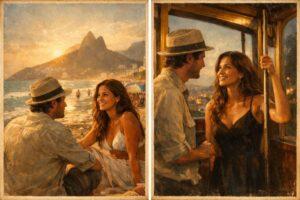
Rio de Janeiro is a city of beaches, hills, and samba. Colonial echoes meet tropical vitality in neighborhoods, plazas, and hillside terraces. From summer nights of music on Copacabana to autumn mornings in Santa Teresa’s leafy streets, Rio pulses with rhythm year‑round.
Wanderer Tale: The Girl from Ipanema
On the beach of Ipanema I see her sitting with a coconut in her hand. She sips, visibly enjoying herself, through a straw. Coconut water, I know, is created when the nut absorbs rainwater. The young nut filters it and enriches it with minerals and vitamins. “I can see you are looking,” she says. “Would you like a sip? It’s good for thirst.” I am left speechless, surprised by her offer. “Go on, take some,” she smiles, when she notices my hesitation. The coconut water slides over my tongue, wonderfully fresh! “Do you know who I am?” she asks. How could I know, I think. Her brown eyes look at me with a mysterious gaze that touches me to the core of my being. I grow shy under it. “I’m the girl from Ipanema.” “The girl from that song?” I hear myself stammer. “Yes, senhor, that’s me.”
Suddenly she stands up. “I have to go, I still need to work.” I ask her what kind of work she does. “I’m a singer, tonight I perform in a bar in Santa Catarina.” “What do you sing?” I ask. “Bossa Nova, The Girl from Ipanema, those kinds of songs… If you feel like coming along?” She looks at me as if she already knows the answer.A little later we’re in a tram that winds its way uphill toward the lively neighborhood that shines in a haze of nostalgia. From the rattling vehicle, Rio unfolds before my eyes: the beach below, the hill above, the city caught in a swinging samba and a melancholic bossa.As the tram climbs higher, I feel the evening air brushing against my face. The sound of the rails blends with her voice, as if the city itself is singing along. Below us the lights of Rio sparkle, like stars that have fallen to earth. She glances outside and says softly: “Rio is always two things at once — light and shadow, celebration and silence.”As the tram continues its way, she begins to sing. Her voice is soft, rocking like the ocean, dreamy and floating with longing. “Bossa Nova is more than music alone. It is like life itself, a dance between hopeful desire and melancholic nostalgia.”That evening she shines on stage. Accompanied by two musicians, her voice sounds magical, like a nightingale. Through her voice I hear Rio sing: playful as the beach, soulful as the hillside neighborhood, and carrying the rhythm of Rio’s heart.
Santa Teresa: Rio’s Bohemian Soul
Rio de Janeiro dazzles the world with its golden beaches, carnival rhythms, and the watchful gaze of Christ the Redeemer. From the statue’s lofty perch, the city unfurls like a dream—green hills tumbling into the Atlantic, samba beats pulsing through its veins. Yet beyond the iconic postcard lies a quieter enchantment: the hillside neighborhood of Santa Teresa, Rio’s bohemian soul.
A Village of Villas
In the 19th century, as Brazil’s coffee fortunes blossomed, Rio’s elite sought refuge from the bustle below. They built grand villas and mansions on a hill crowned by a convent founded in 1750, christening the district Santa Teresa. For a time, it was a picturesque enclave, a “village above the city.” But prosperity proved fleeting. Within decades, the wealthy fled, and the neighborhood became hemmed in by expanding favelas, its grandeur shadowed by poverty and crime.
The Artist’s Revival
Walk today along Santa Teresa’s steep, cobblestoned lanes and you still feel echoes of its past. Some mansions stand in romantic decay, ivy curling over crumbling walls. Others have been reborn as boutique hotels, cafés, and ateliers. In the 1960s and 70s, artists claimed the district, transforming it into a creative sanctuary. Their presence revived the neighborhood, and Santa Teresa began to breathe again—graffiti blossomed across walls, studios opened their doors, and the area earned its nickname: the Montmartre of Rio. Today, walking Santa Teresa’s steep, winding lanes feels like stepping into a living gallery. Ivy curls over crumbling walls, stairways are mosaicked with color, and every corner hums with artistic energy.
The Tram in the Sky
When I first visited Santa Teresa the neighborhood was still linked to downtown by a tram that rattled across a former aqueduct before zigzagging up into the district. The ride was spectacular—an airborne journey into another world. Not long after my visit, a tragedy took place. The tram derailed, claiming lives and halting service for quite some time. Though most of the main route is restored, the most notable difference is a strict shift from a local “hop-on, hop-off” utility to a tourist experience with enhanced safety rules.
A Neighborhood of Contrasts
Santa Teresa is a place of contrasts—decay and rebirth, history and art, silence and samba. It is Rio seen from another angle: not the glitter of Copacabana nor the grandeur of Christ the Redeemer, but a hillside village where creativity thrives amid cobblestones and murals. To wander here is to glimpse Rio’s bohemian heart, beating quietly above the carnival roar.
The musical connection between Lisbon and Rio is indeed one of the most profound examples of cultural osmosis in history. At the heart of this “Atlantic Dialogue” lies the concept of Saudade, a Portuguese word that defies simple translation but roughly describes a deep, melancholic longing for something or someone that is absent, often with the knowledge that they may never return.
While Lisbon gave birth to Fado, Rio de Janeiro transformed that same spirit of longing into Bossa Nova, creating two distinct sounds that share a soulful DNA.
Lisbon: The Voice of Fado
In the narrow, winding alleys of Lisbon’s Alfama and Mouraria districts, Fado emerged in the 19th century as the voice of the working class and the fados (fates) of the city.
The Sound: It is raw, acoustic, and often accompanied by the guitarra (a pear-shaped string instrument with a distinct metallic twang) and the viola.
The Emotion: Fado is the sound of Saudade in its most direct form. It is often described as “the music of the sea” and the sailors who left Lisbon and never returned. The lyrics frequently touch on destiny, loss, the sea, and the struggles of daily life.
The Atmosphere: It is intimate, often performed in dimly lit casas de fado where the audience sits in silence, respecting the emotional weight of the song.
Key Figures: The legendary Amália Rodrigues (the “Rainha do Fado”) is the undisputed icon who brought this sound to the world, embodying the Portuguese soul.
“Fado is not just music; it is a way of life, a confession of the soul.” — Common sentiment in Lisbon
Rio de Janeiro: The Samba of the Soul
Fast forward to the mid-20th century in Rio, specifically the Copacabana and Ipanema neighborhoods. Brazilian musicians, deeply influenced by Portuguese traditions but also by African rhythms and American jazz, began to soften the edges of Fado’s tragedy.
The Sound: Bossa Nova (“New Trend”) took the harmonic complexity of Fado and the rhythmic drive of Samba, smoothing them out into a cool, syncopated beat. It often features a nylon-string guitar played with a unique fingerstyle technique.
The Emotion: Bossa Nova retains the Saudade of Fado but tempers it with a sense of optimism, sophistication, and “cool.” It is the sound of longing while sitting on a sunny beach. It is melancholic, but it dances.
The Connection: The lyrics of Bossa Nova often reflect the same existential yearning found in Fado, but the delivery is more detached and poetic.
Key Figures:Antônio Carlos Jobim (the “Einstein of Bossa Nova”) and João Gilberto created the genre. Vinicius de Moraes, the poet and lyricist, wrote the iconic “The Girl from Ipanema,” which perfectly captures this blend of tropical beauty and deep longing.
The Atlantic Dialogue: How They Speak to Each Other
The connection is not just thematic; it is historical and musical.
Shared Roots: Both genres rely heavily on the Portuguese language and its unique capacity for expressing melancholy. The rhythmic structures of early Samba and the melodic phrasing of Fado share a common ancestor in the folk music of the Portuguese colonization of Brazil.
From Tragedy to Cool: You can view Bossa Nova as Fado’s “sunny cousin.” Where Fado screams at the void of the sea, Bossa Nova whispers to it from a beach chair. Fado embraces the pain of Saudade; Bossa Nova romanticizes it.
Modern Exchange: Today, the dialogue continues. Contemporary artists from both cities frequently collaborate. You can hear Fado singers incorporating Bossa Nova rhythms, and Brazilian artists reinterpreting classic Fado songs with a jazz influence.
Example: The late Mariza, a modern Fado star, has often performed in Rio and collaborated with Brazilian musicians, bridging the gap between the two styles.
Example: The song “Garota de Ipanema” (The Girl from Ipanema) is arguably the most famous song in the world, and its lyrics are pure Saudade set to a Bossa Nova beat, proving that the feeling of Lisbon lives on in Rio.
Summary of Differences and Similarities
Feature
Fado (Lisbon)
Bossa Nova (Rio)
Primary Emotion
Tragic Saudade, fatalism
Wistful Saudade, cool optimism
Instrumentation
Guitarra, Viola, Voice
Nylon guitar, light percussion, vocals
Rhythm
Slow, free-flowing, dramatic
Syncopated, steady swing, “laid back”
Setting
Dark taverns, historic neighborhoods
Beaches, jazz clubs, sophisticated lounges
Philosophy
“I miss you, and I know you are gone.”
“I miss you, but the sun is warm today.”
The Atlantic Dialogue between Lisbon and Rio proves that Saudade is a universal human experience. Whether it is the raw, acoustic cry of a Fado singer in Alfama or the gentle, jazz-inflected whisper of a Bossa Nova ballad in Ipanema, the longing for what is lost remains the same. It is a conversation that has been going on for centuries, and it continues to resonate with anyone who has ever loved and lost.
Paraty old ‘pirate’ town
Paraty, nestled on Brazil’s stunning Costa Verde, is a living time capsule where cobblestone streets whisper tales of pirates, gold, and colonial grandeur. Unlike most Brazilian cities, Paraty’s historic center forbids cars, preserving its 18th-century charm and allowing visitors to wander as if stepping into a bygone era. This UNESCO World Heritage site, officially recognized in 2019, blends Portuguese colonial architecture with lush Atlantic rainforest and crystal-clear Atlantic waters.
Though often dubbed a “pirate town,” Paraty’s history is more nuanced. It was never a pirate stronghold in the Caribbean sense. Instead, its reputation stems from its role as a critical hub in the *Caminho do Ouro* (Gold Route). During the 17th and 18th centuries, vast quantities of gold mined in Minas Gerais were shipped through Paraty’s port to Portugal. This wealth attracted not only legitimate traders but also privateers, smugglers, and opportunistic buccaneers who eyed the treasure-laden ships. Local legends speak of hidden caves and sunken galleons, fueling the town’s mythic pirate allure.
The town’s architecture tells a different story. Strolling through the *Centro Histórico*, you’ll encounter colorful colonial mansions with intricate wooden balconies, tiled roofs, and whitewashed walls. The *Igreja Matriz de Nossa Senhora dos Remédios*, built in the 1700s, stands as a testament to the town’s religious and economic importance. Its baroque facade and gilded interior reflect the prosperity brought by the gold trade. Unlike Rio or Salvador, Paraty avoided modern high-rises, maintaining a low skyline that harmonizes with the surrounding mountains and sea.
Paraty’s natural beauty is equally captivating. The town sits within a bay dotted with over 65 islands, many accessible only by boat. The nearby *Paraty-Mirim* and *Ilha Grande* offer pristine beaches, mangroves, and opportunities for kayaking, snorkeling, and hiking. The *Trilha dos Conventos* (Convents Trail) leads through dense forest to secluded waterfalls and historic ruins, showcasing the region’s rich biodiversity.
Culturally, Paraty is a melting pot. Its annual *Paraty Literature Festival* (FLIP), one of Latin America’s most prestigious literary events, draws authors and readers from around the globe. The town also celebrates Afro-Brazilian traditions, with the *Candomblé* religion and *Capoeira* deeply rooted in local life. The *Festa do Divino Espírito Santo*, a vibrant festival dating back to the 1800s, features colorful processions, traditional music, and communal feasts.
Visitors today come for more than history. The car-free center invites leisurely exploration, with charming cafes, artisan shops, and live music filling the air. The *Paraty Bay* offers sunset cruises, while the *Paraty River* provides tranquil canoe rides through mangrove forests. For the adventurous, the *Paraty-Mirim* trail leads to hidden beaches and fishing villages, where time seems to stand still.
Paraty’s magic lies in its duality: a town steeped in colonial history yet vibrantly alive with contemporary culture. It’s a place where the past isn’t just remembered—it’s experienced. Whether you’re tracing the footsteps of gold merchants, hunting for pirate lore, or simply sipping *cachaça* on a sun-drenched square, Paraty offers a unique journey through Brazil’s rich tapestry.
Practical Compass
Notes on hidden corners, local flavors, and ways to wander with ease.
Rio de Janeiro – city of samba
Highlights
Copacabana & Ipanema: Legendary beaches for sunbathing, samba rhythms, and sunset strolls.
Christ the Redeemer: Iconic statue atop Corcovado, offering panoramic views over the city and bay.
Sugarloaf Mountain: Cable car ride with breathtaking vistas of Guanabara Bay.
Santa Teresa: Bohemian hillside neighborhood with colonial houses, art studios, and tram rides.
Lapa Arches & Nightlife: Historic aqueduct turned tramway, surrounded by vibrant bars and samba clubs.
Botanical Garden & Tijuca Forest: Tropical flora and trails in the world’s largest urban forest.
Practical Info
Getting There: Rio’s Galeão International Airport (GIG) is 30 minutes from downtown; direct flights connect to Europe, North America, and South America.
Getting Around: Metro and buses cover most areas; yellow taxis and ride apps are common. Walking is scenic but be mindful of safety. Cable cars and trams add charm to hillside routes.
Best Seasons: Summer (Dec–Mar) brings Carnival and beach life; winter (Jun–Aug) is mild, with fewer crowds and clear skies.
Slow Travel Tips
Stay in Santa Teresa for mornings with tram bells and leafy courtyards.
Visit Christ the Redeemer at dawn or dusk for fewer crowds and magical light.
Embrace carioca spirit with a samba night in Lapa.
Wander Copacabana’s promenade at leisure, sipping fresh coconut water.
Explore Tijuca Forest trails slowly, listening to birdsong and waterfalls.
Sketch or journal from Sugarloaf’s summit, letting the city’s rhythm sink in.
Cusco is the heart of the Andes, where colonial overlays rest on Inca foundations. Rapa Nui stands as a remote horizon of discovery. Statues gaze outward toward the Pacific’s endless expanse, echoing the mystery of Cusco’s stones.
Cusco is the ancient capital of the Inca Empire, perched high in the Andes. Cobblestone streets, colonial plazas, and sacred ruins blend into a city alive with history and altitude. From clear dry‑season skies to festival colors in June, Cusco’s rhythm shifts with the mountains yet always feels timeless.
“Sometimes the city itself speaks through a voice you don’t expect.”
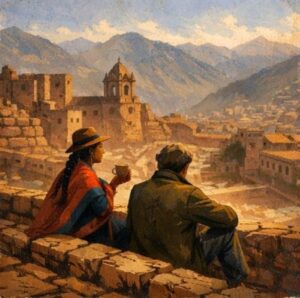
The stones of Cusco lie heavy beneath my feet. Every step weighs. Behind every wall hide stories that have often been told but never written down.
I walk slowly through a narrow street where the sun, Inti, shines golden on the cobblestones. The air is thin. Here, at over 3000 meters of altitude, it feels as if the city itself is breathing slowly but powerfully.
I climbed toward San Blas, where the streets grow steeper and the air thinner. The sound of my footsteps echoes against the cobblestones.
On a bench sits a woman. Her hands rest on a woven cloth full of patterns and words that I cannot decipher. Her long black hair is gathered into a braid. She turns her head in my direction and looks at me with a serious expression as I walk by. “You’re lost,” she says.
I look at her and search for words that can break my silence. “Sit down,” she says. “If you listen closely, you can hear the streets speak.” Then the way will reveal itself.
“I can tell by looking at you that you come from the lowlands.” You are closer to the sun here. Closer to God, Inti the eternal bringer of light. I am a daughter of the sun.”
She talks about the Incas who left majestic structures here. About the time when the city was filled with strange voices from Europe. How a new God came who received a cathedral atop her temple.
That all the stones of the city are not just walls and streets but memories. The stones remain silent. That every stone has known a hand that helped build a city, not to disappear, but to remain.
I listen, silently but captivated, to the words she shares with me. She has to laugh at my silence while pouring chicha de jora from a large pitcher.
She takes a few sips from the cup and hands it to me. “Now it’s your turn,” she says. I look surprised. “Drinking from the same cup? ” I think, but I find it a beautiful gesture.
I taste the earthy flavor. The scent of maize and earth mingles with the thin air. It feels as if the mountains themselves breathe through the cup. For a moment, the Andes are not only a horizon but also a voice speaking to me. In this instant, I taste not only a drink but also a landscape.
She whispers a single word: “Pachamama.” It sounds simple, but it carries a world within it. Mother Earth, the breath of origin. The word lingers in the street, like an echo that doesn’t fade. I feel how it connects me to something greater than my own journey.
Just as I drank from her cup, so I drink from the source of origin — and taste that I am part of an ancient voice.
As I rise to continue, she confides in me once more: “Listen, and you will hear the walls speak.” Her words echo.
I walk on and listen and feel how Cusco is not just a city but a mirror of origin.
“The horizon speaks in many languages, but always with the same voice of origin.”
Cusco in Perspective
Cusco: A Travel Guide for Slow Travelers
Cusco: Where Time Stands Still
“In Cusco you feel the breath of the earth. Not of the past, but of the present — and of the eternal. It is here that the sun rises over ancient stones, and that the spirits still speak.”
Cusco is not a city of photos or checklists. It is a place where time stands still — where every street tells a story, every smile is a gift, and every morning begins with a prayer to the mountain spirits. For everyone who wants not just to see, but to feel, hear and experience: here is a travel guide for slow travelers who want to discover the Andes in a deep, authentic way.
🏛️ The Heart of the Incas: Sights at a Slow Pace
Cusco is a city of layers — Incas, colonists, and a vibrant present. But those who rush will miss the real Cusco. Go slowly, with patience, and you will see that everything here says exactly what it wants to say.
1. Plaza de Armas – The Heartbeat of Cusco
The largest square in the city, but not the busiest. Come early in the morning — before the tourists. Sit down on a bench, and watch how the sun hits the white cathedral. Listen to the sound of a pan flauto playing a melody across the square. Here you meet the inner Cusco: young mothers feeding their children chicha, older women selling cups of chicha morada, and priests praying on the steps.
Tip: Take a cup of coffee with a view of the cathedral. Turn off your phone. Close your eyes. Feel the city.
2. Qorikancha – The Sun Temple of the Incas
This is the place where the Incas worshipped the sun — and where the Catholic Church later built a monastery on top. The stones were crafted in a way that is still not fully understood: razor-sharp corners, without mortar, and with a precision that still baffles modern scientists. Ask for a local guide who can tell you about the pachamama (Mother Earth), the apu’s (mountain spirits), and the symbols carved into the stones.
Use your senses: feel the cold of the stones, smell the incense, and hear the sound of ancient Incan music drifting through the air.
3. Sacsayhuamán – The Wall of the Sons of the Sun
Not just a fortress — Sacsayhuamán is an energy centre. The Incas did not build it for defence, but for rituals. Walk to the top, sit down on a wall, and look out over Cusco from the hillside. Feel the gaze on your back — as if the earth itself is watching you.
Pro tip: Bring a small bottle of chicha. Pour a little onto the ground as an offering — a gesture of respect to the Pachamama. Then you will truly feel you belong.
🎭 Culture: Where Life Unfolds
Cusco is not a city of sights — it is a city of living traditions. It lies in the valley of the Valle Sagrado, but it feels more like a spiritual city than a tourist destination.
Festivals – Where the World Becomes More Real
Inti Raymi (24 June) — the Winter Solstice Festival. The largest historical re-enactment in South America. In the golden sunlight, the tunicas (Inca warriors) dance, and the ayllus (village communities) sing. It is a celebration where you lose yourself in the music and the colours.
Carnaval (February or March) — water, coloured powder, and dancing everywhere. Join in — but make sure all your belongings are safely stored in a plastic bag.
San Pedro Market – The Real Cusco
This is not a tourist market. This is where the locals shop. Head to the vegetable stalls — papa amarilla, oca, and mote — and watch the women sitting surrounded by alpaca blankets. Ask for a taste of chicha morada — purple corn drink. They are proud of their products. And once you start talking, they will tell you everything.
Use your senses: feel the texture of the handmade textiles, smell the herbs and spices, and listen to the voices speaking in Quechua.
🍽️ Gastronomy: Eating as a Ritual
In Cusco, eating is not an obligation. It is a ceremony. No fast food — only slow, with respect.
Must-Try’s:
Cuy (guinea pig) — a traditional dish that has been eaten in the Andes for thousands of years. It tastes like chicken, with a spiced twist, and is often served with potatoes and rocoto (a hot chilli pepper). Eat it at a family restaurant like Chicha por Gastón Acurio, or at a picantería — a local eatery where the locals eat.
Don’t be afraid — it is an honour to try it. And once you do, you will find: it is delicious, and it connects you to the ancient traditions of the Andes.
Fun fact: In Quechua (the language of the Incas), the guinea pig is called ‘cuy’ — and it is a symbol of wealth and prosperity. It is often eaten at celebrations, such as Inti Raymi, or at births and weddings.
Lomo Saltado — a fusion of Peruvian and Chinese cuisine. Eat it at Pacha Papa, with a view over the Plaza. It is a taste you will never forget.
Quinoa with potato and cheese stew — simple, but deeply flavourful. You will find it in every picantería in the city.
Chicha Morada & Cerveza Cusqueña — the local drinks. Try them sitting in a sillón (chair) on a terrace with a view of the Andes.
Tip: Book a cooking workshop with a local family — often available through Airbnb Experiences. You will make ceviche, anticuchos together, and learn about herbs like huacatay (Peruvian black mint).
🚶♀️ Excursions Outside the City: The Andes at a Slow Pace
Cusco is a gateway — not just to Machu Picchu, but to the entire Andes. And that is where the real magic lies.
1. Pisac & Ollantaytambo – A Journey Through Time
Pisac Market (Tuesday, Thursday, Sunday) — the largest market in the Andes. Watch the women selling ch’uñu (freeze-dried potatoes) or mote (cooked corn). Ask for a taste — they are proud of their produce.
Ollantaytambo — a living Inca town. Stay in a hostel in the centre, and walk through the narrow cobblestone streets early in the morning, before the day crowds arrive.
2. Moray & Maras – An Ancient Laboratory
Moray — circular agricultural terraces, believed to be an ancient Incan experimental farming site. Come here when the sun is low — the light is magical, and the shadows bring the terraces to life.
Maras — salt pans carved into the hillside. You can collect and buy salt directly from the local farmers who have worked these terraces for generations.
3. Lares Trek – An Alternative to the Inca Trail
3-4 days of walking through small villages, with overnight stays at local family homes. You eat with them, learn about their daily lives, and walk past mountain lakes that most tourists will never see.
🏔️ Machu Picchu – Not Just a Sight
“Machu Picchu is not a photo — it is an experience.”
Tips for Slow Travelers:
Choose the train with PeruRail or Inca Rail (not the budget train) — you sit in a comfortable carriage with panoramic views of the Andes.
Stay overnight in Aguas Calientes (not in Cusco on the day of your visit) — you can reach the site early in the morning, before the buses from Cusco arrive.
Come at sunrise — and stay until sunset — the sky changes colour throughout the day, and the light falls differently on the ancient stones with every passing hour.
Walk to the Sun Gate — it is an extra hike, but the view looking down over Machu Picchu from above is unforgettable.
Ask for a guide who can speak about the spiritual meaning of the temples — not just the history, but the energy and intention behind each sacred space.
Bonus:
Huayna Picchu or Machu Picchu Mountain — choose one. Huayna Picchu is steeper, but the view is spectacular. Book at least 6 months in advance — tickets sell out fast.
🛍️ Markets & Local Shopping
San Pedro Market — the real market. Buy coca leaves (for altitude sickness), chocolate (real Peruvian cacao), and alpaca scarves.
Mercado de Artesanías (Craft Market) — here you will find paintings, masks, and textiles. Bargain — it is part of the tradition, and sellers expect it.
ChocoMuseo — make your own chocolate from Peruvian cacao beans. A wonderful gift or personal souvenir to take home.
🚌 Local Transport — Like a Local
Taxis — always negotiate the price before you get in. A ride within the city should cost no more than 5 soles.
Colectivos (minibuses) — 1.50 soles per ride. No fixed routes displayed, but ask: “¿A dónde vas?” (Where are you going?) — they will get you almost anywhere.
Bicycles — rent a bike and cycle to Sacsayhuamán or down into the valley. The roads are steep — but the views are absolutely worth it.
Walk — Cusco is compact. Almost everything is reachable on foot — and you will discover far more that way.
💡 Essential Tips for Slow Travelers
Take your time — Cusco is not built for speed. Sleep in a hostel with a rooftop terrace, drink your coffee while looking at the mountains, and simply do nothing — that is the real journey.
Learn 5 Spanish phrases — “Hola”, “Gracias”, “¿Cómo estás?”, “Una cerveza, por favor”, “¿Cuánto cuesta?” — it makes an enormous difference to how locals receive you.
Dress in layers — the temperature can swing from 5°C to 25°C in a single day.
Use coca leaves — chew them for altitude sickness, or drink mate de coca (coca tea). It really works, and it is completely legal in Peru.
Respect the pachamama — do not litter, and always ask permission before photographing local people.
Ask your hostel for a local experience — they can often connect you with families, artists, or farmers who open their homes and lives to curious travellers.
📸 Hidden Gems
Museo de Arte Precolombino — stunning Inca and pre-Inca art in a beautifully restored colonial mansion. Far less crowded than the other museums, and deeply moving.
Cusco’s Rooftops — ask at your hostel if you can access the roof. The view over the terracotta rooftops, with the Andes rising behind them, is one of the most beautiful sights in the city.
The Church of La Compañía — Baroque splendour, with gilded decorations that seem to glow from within. Come in the afternoon — the light falls perfectly on the golden walls.
The neighbourhood of San Blas — a maze of narrow streets, ceramic artists, weavers, and tiny cafés. Buy a handmade mask or a linen shirt from a local artist — and take the time to talk with them about their craft.
✨ Conclusion: Cusco Is Not a Trip — It Is an Encounter
Cusco is not a city of sights. It is a city of feelings. It is here that you realise: the earth is alive. The stones are not cold — they are warm. And the sun is not just a light source — it is a god. Come here not to see. Come here to feel. Come here not to photograph. Come here to live. And then, in one quiet moment — you will realise: you are not in Cusco. You are with Cusco. “Give yourself the time. It is the only way to truly understand Cusco.”
Machu Picchu
Machu Picchu and the Inca Empire: Engineering, Spirituality, and the Legacy of the Andes
Nestled high in the Andes Mountains of Peru, Machu Picchu stands as one of the most breathtaking and enigmatic archaeological sites on Earth. More than just a collection of ancient stone buildings, it is a testament to the ingenuity, spirituality, and organizational prowess of the Inca civilization, which rose to become the largest empire in pre-Columbian America. Built in the 15th century by the Inca ruler Pachacuti, Machu Picchu was a royal estate and religious retreat, designed to harmonize with its dramatic mountain landscape. Its construction, using precisely cut stones that fit together without mortar, showcases a mastery of engineering that continues to astound modern architects.
The Inca Empire, which flourished for less than a century before the arrival of the Spanish, was a complex society built on a foundation of sophisticated agriculture, a vast network of roads, and a deep spiritual connection to the natural and celestial worlds. This article explores the origins of the Inca, the rise of their empire, the mysterious purpose of Machu Picchu, the devastating impact of Spanish conquest, and the enduring legacy of Inca culture in the Andes. It also provides a practical guide for modern travelers seeking to experience the wonder of Machu Picchu for themselves.
The Rise of the Inca Empire
The story of Machu Picchu is inextricably linked to the rise of the Inca Empire, a civilization that transformed a small kingdom into a vast, powerful state. The Inca originated in the Cusco Valley, in what is now southern Peru, and their rise to power began in earnest with the reign of Pachacuti Inca Yupanqui, who ascended to the throne in 1438. Pachacuti, whose name means “Earth Shaker,” was a brilliant military strategist and administrator who expanded the Inca territory through conquest and diplomacy. He reorganized the empire into a highly efficient state, with a centralized government based in Cusco. The Inca Empire, known as Tawantinsuyu, or “The Four Regions,” eventually stretched from modern-day Colombia to Chile, encompassing a diverse array of peoples and ecosystems.
The Inca were not a literate society; they used quipus, a system of knotted strings, to record information and manage their vast bureaucracy. Their greatest achievement was their road system, which spanned over 25,000 miles and connected the far-flung corners of the empire. These roads, built with stone steps and bridges, allowed for the rapid movement of armies, messengers, and goods. The Inca also developed advanced agricultural techniques, such as terracing, which allowed them to cultivate crops on steep mountain slopes. The empire was held together by a common language, Quechua, and a shared religion that centered on the worship of the sun god, Inti, and the worship of nature spirits known as huacas. The Inca were also master builders, using stone masonry to construct cities and temples that have withstood the test of time.
The Mystery of Machu Picchu
Machu Picchu, often referred to as the “Lost City of the Incas,” is a remarkable feat of engineering and architecture. Located at an altitude of over 7,700 feet, it was built around 1450 as a royal estate for Pachacuti, the ninth Sapa Inca, or emperor. The site is situated on a mountain ridge above the Urubamba River, offering breathtaking views of the surrounding peaks. The purpose of Machu Picchu remains a subject of debate among archaeologists. While it is widely accepted that it was a royal retreat, some theories suggest it was also a religious sanctuary or a center for astronomical observation. The site is divided into two main areas: the agricultural sector, with its extensive terraces for farming, and the urban sector, which includes temples, residences, and plazas.
The most iconic structure is the Temple of the Sun, a semi-circular building with a strategically placed window that aligns with the winter solstice. The stone walls of Machu Picchu are a marvel of Inca engineering. The stones are cut with such precision that they fit together without mortar, a technique known as ashlar masonry. This method not only created aesthetically pleasing structures but also made the buildings highly resistant to earthquakes, a common occurrence in the Andes. The site also features sophisticated water management systems, including fountains and channels that still function today. The Inca built Machu Picchu to be in harmony with its natural surroundings, with the layout of the buildings and terraces following the contours of the mountain. This integration of architecture and nature is a hallmark of Inca design and reflects their deep spiritual connection to the land.
The Spanish Conquest and the Fall of the Inca
The golden age of the Inca Empire was abruptly ended by the arrival of the Spanish conquistadors in the 16th century. In 1532, Francisco Pizarro and his small army of soldiers arrived in Peru, seeking gold and glory. The Inca Empire was in the midst of a civil war between two brothers, Atahualpa and Huáscar, which had weakened the state. Pizarro took advantage of this internal conflict and captured Atahualpa, the newly crowned emperor, during a meeting in the city of Cajamarca. Atahualpa was held for ransom, and despite paying an enormous amount of gold and silver, he was executed by the Spanish in 1533.
The Spanish then marched on Cusco, the Inca capital, and established their rule over the empire. The conquest was brutal and devastating. The Spanish introduced diseases like smallpox, which decimated the indigenous population. They also destroyed Inca temples and artifacts, seeking to eradicate the native religion and replace it with Christianity. The Inca resistance continued for several decades, with the last Inca stronghold, Vilcabamba, falling in 1572. The Spanish established a new colonial government and forced the Inca people into labor, using them to mine silver and gold for the Spanish crown. The once-mighty Inca Empire was reduced to a shadow of its former self, and its people were subjected to centuries of oppression. Despite this, the Inca culture and traditions survived, passed down through generations and preserved in the highlands of the Andes.
The Enduring Legacy of Inca Culture
The legacy of the Inca Empire is still evident in the Andes today. Although the Spanish conquest brought about significant changes, many aspects of Inca culture have endured and continue to shape the lives of the people in the region. The Quechua language, once the lingua franca of the empire, is still spoken by millions of people in Peru, Bolivia, and Ecuador. Inca agricultural techniques, such as terracing and the use of guano as fertilizer, are still practiced in some areas. The Inca road system, though largely abandoned, has been partially restored and is now a popular tourist attraction.
The spiritual beliefs of the Inca, which centered on the worship of nature and the ancestors, have blended with Catholicism to create a unique syncretic religion. This is evident in the many festivals and rituals that celebrate both Inca and Christian traditions. The Inca also left behind a rich artistic legacy, including textiles, pottery, and metalwork, which are still produced and admired today. The most enduring symbol of Inca culture is Machu Picchu itself.
Rediscovered by the American explorer Hiram Bingham in 1911, the site has become a global icon of ancient engineering and mystery. The Peruvian government has made significant efforts to preserve Machu Picchu, which is now a UNESCO World Heritage Site and one of the New Seven Wonders of the World. The site attracts millions of visitors each year, who come to marvel at the beauty and ingenuity of Inca architecture. The story of the Inca is one of resilience and adaptation, a testament to the enduring power of human culture.
A Guide to Your Journey to Machu Picchu
For travelers seeking to experience the wonder of Machu Picchu, careful planning is essential. The journey to this remote site involves a combination of flights, buses, and trains, and the altitude can be challenging. The best way to reach Machu Picchu is to fly into Cusco, the former Inca capital, which is located at an altitude of 2,430 meters. It is recommended to spend a few days in Cusco to acclimatize (at 3.400 meters) to the altitude and explore its rich history and culture.
Machu Picchu how to get there
From Cusco (Poroy) or Ollantaytambo, travelers can take a train to the town of Aguas Calientes, which is located at the base of Machu Picchu. The train journey is scenic and offers stunning views of the Andes. From Aguas Calientes, a bus ride or a hike up a steep mountain path will take you to the entrance of Machu Picchu. Important: You need to buy a ticket in advance to enter Machu Picchu.
A nice alternative is to take a local bus towards Quillabamba, a small coffee town. Stay one or two days there and taste the atmosphere of the highland jungle and the green surroundings. Continue your way the hydroelectrica station. From here you can take the train, or walk along the rails towards Aguas Calientes. (see video). Although it is possible to arrange this all by yourself, a more convenient and faster way could be to book a overland tour to Machu Picchu.
On site, a guided tour is highly recommended, as it provides valuable insights into the history and significance of the site. The hike to Machu Picchu is moderately challenging, with steep steps and uneven terrain, so it is important to wear comfortable shoes and bring plenty of water. The weather in the Andes can be unpredictable, so it is advisable to bring layers and rain gear. The altitude can cause symptoms of sickness, so it is important to drink plenty of water and avoid strenuous activity on the first day. With careful planning and preparation, a visit to Machu Picchu can be a life-changing experience, offering a glimpse into the remarkable world of the Inca.
What to See and Do
Machu Picchu offers a wealth of experiences for visitors. The most popular attraction is the main site itself, which includes the Temple of the Sun, the Room of the Three Windows, and the Intihuatana stone, which is believed to have been used for astronomical observations. The site also features the agricultural terraces, which are a testament to Inca engineering and agricultural ingenuity. For those seeking a more challenging adventure, the Huayna Picchu hike offers stunning views of Machu Picchu from above. The hike is steep and requires a separate permit, so it is important to book in advance. Another popular activity is the Inca Trail, a multi-day trek that follows the ancient Inca road system to Machu Picchu. The trail offers breathtaking views of the Andes and passes through several Inca ruins along the way. For those interested in the local culture, the town of Aguas Calientes offers a variety of restaurants, shops, and markets. The town is also known for its hot springs, which are a great way to relax after a day of exploring. With so much to see and do, a visit to Machu Picchu is an unforgettable experience that offers a glimpse into the remarkable world of the Inca.
Peru: Conquest and Silence
Peru’s history is marked by the encounter between Inca civilization and Spanish conquest. Few places embody this tension more vividly than Cusco, the former capital of the Inca Empire. Walking through its streets, one sees how colonial architecture was built directly upon Inca foundations. Cathedrals rise where temples once stood, and Spanish plazas cover ancient ceremonial spaces.
This layering of stone is more than architectural. It represents the imposition of one worldview over another. The Spanish sought to erase indigenous religion and authority, replacing them with Catholicism and imperial power. Yet the Inca presence did not vanish. The massive stones of their walls remain, fitted so precisely that centuries of earthquakes could not dislodge them.
The silence of these stones speaks of resilience. Beneath the cathedral, the temple still whispers. The Inca voice persists in Quechua, spoken by millions across the Andes. It survives in rituals, festivals, and everyday practices that blend Catholic and indigenous elements.
Peru’s colonial history also shaped its social hierarchy. Indigenous communities were marginalized, their labor exploited in mines and agriculture. Spanish elites controlled land and power, while mestizo identities emerged in the spaces between. This legacy continues to influence inequality and cultural debates in modern Peru.
At the same time, Peru’s heritage has become a source of pride and global recognition. Machu Picchu, rediscovered in the early twentieth century, symbolizes both the grandeur of the Inca past and the persistence of indigenous culture. Tourists flock to see the ruins, but for Peruvians, they represent continuity with ancestral voices.
The Atlantic connection is clear: Spain’s conquest was part of a larger transoceanic movement that reshaped societies across the Americas. Ships carried not only soldiers and priests, but also ideas, institutions, and hierarchies. The dialogue between Europe and South America was unequal, often violent, but it produced a layered identity that endures.
Peru’s story reminds us that silence can be a form of resistance. The stones of Cusco do not speak loudly, but they endure. They carry memory across centuries, challenging us to listen to what was meant to be forgotten.
Practical Compass
Highlights
Plaza de Armas: Heart of the city, framed by the Cathedral and colonial arcades.
Qorikancha: Temple of the Sun, blending Inca stonework with Spanish architecture.
San Pedro Market: Bustling stalls of produce, textiles, and local flavors.
Sacsayhuamán: Monumental Inca fortress with sweeping views.
Sacred Valley Gateway: Easy access to Pisac, Ollantaytambo, and Machu Picchu.
Practical Info
Getting There: Alejandro Velasco Astete Airport (CUZ) connects to Lima and regional hubs.
Getting Around: Walk central streets, use taxis for hills, or take colectivos to nearby towns.
Slow Travel Tips
Acclimate slowly—sip coca tea and stroll gently. Stay in San Blas for artisan mornings. Visit markets early for fresh produce and textiles. Embrace festival life, from Inti Raymi to local parades. Wander cobbled alleys at dusk, letting the Andes guide your pace.
Was there a connection between Peru and Easter Island?
Silent Stones and Sweet Potatoes: The Mysteries of Easter Island and South America
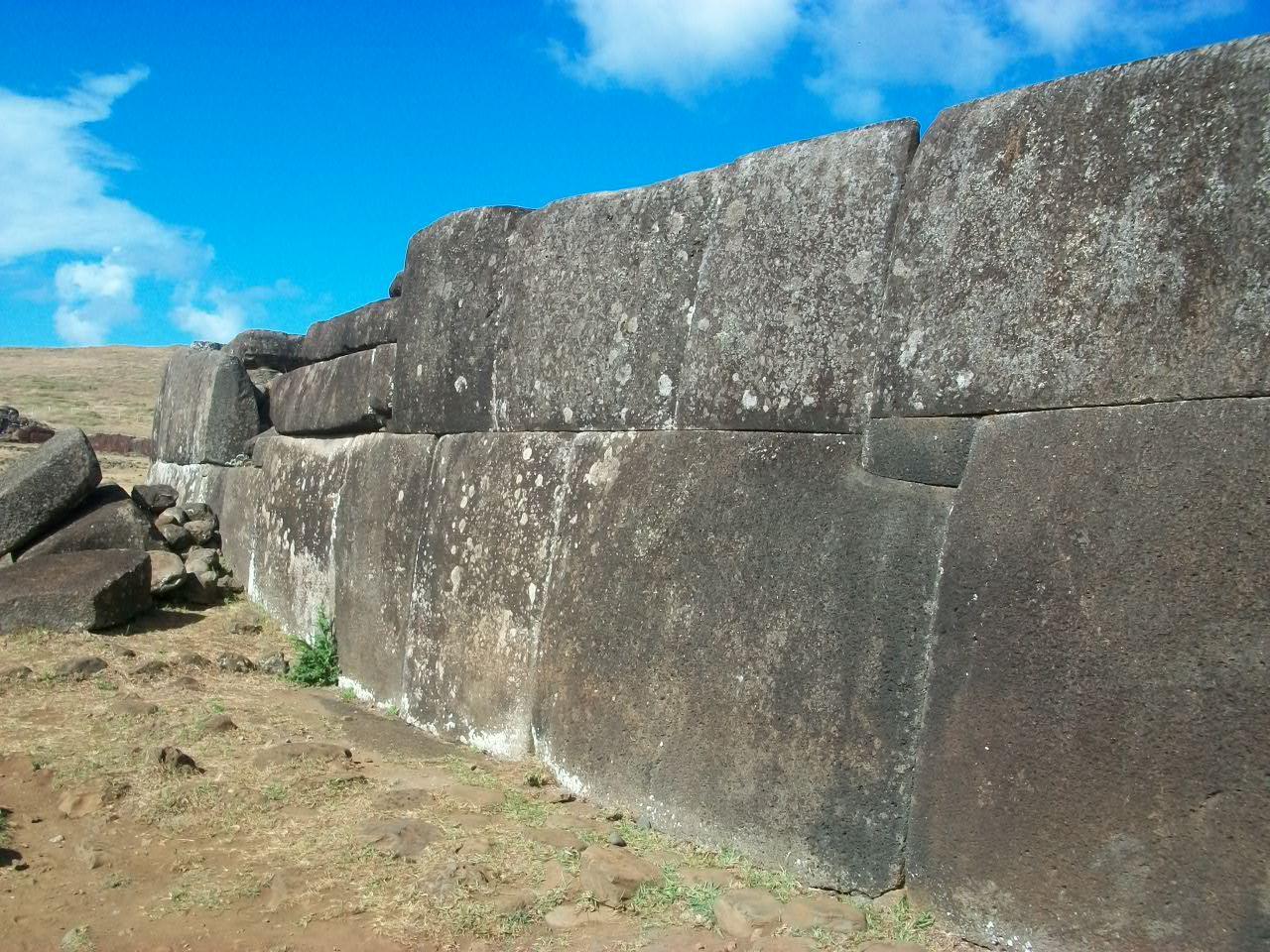
On the remote shores of Rapa Nui (Easter Island), the wind whispers through the legs of the moai, those colossal stone statues that have guarded the island for centuries. To the casual observer, particularly one familiar with the Andes, the island’s stonework bears a striking resemblance to the masterful masonry of the Inca Empire in Cusco, Peru. Massive, fitted stones form the ahu (platforms), such as Ahu Tihara, creating a visual echo of the “Inca walls” thousands of miles away.
While mainstream archaeology does not claim the Inca built these structures, the visual similarities are undeniable. More compellingly, recent scientific discoveries regarding sweet potatoes and chicken bones suggest that contact between Polynesia and South America did occur long before Europeans arrived, hinting at a complex web of interaction that connects these distant worlds.
The Visual Echo: Ahu Tihara and Cusco
The most striking visual link lies in the construction of the ahu. Ahu Tihara, located on the southern coast, features a facade of carefully fitted volcanic stones. Unlike the rough rubble often seen in lesser structures, the stones here are dressed and stacked with precision, creating a vertical, fortress-like wall.
When compared to the Inca walls of Cusco, such as those at Sacsayhuamán or the Coricancha, the similarity is striking. Both cultures:
Built without mortar.
Utilized local volcanic or igneous rock.
Crafted stones that interlock tightly to withstand seismic activity.
This phenomenon is often cited as convergent evolution: two distinct cultures, separated by an ocean, arriving at similar engineering solutions to the problem of building stable platforms in earthquake-prone regions. However, the visual parallel is so strong that it fuels the enduring question: Did they know of each other?
The Sweet Potato: A Botanical Bridge
The strongest evidence of contact is not stone, but seed. The sweet potato (Ipomoea batatas) is native to South America, specifically the region around Peru and Ecuador. Yet, by the time European explorers arrived in the Pacific in the 16th century, sweet potatoes were a staple crop throughout Polynesia, including Easter Island.
The Timeline: Carbon dating of sweet potato remains in Polynesia dates back to 1000 CE, centuries before European contact.
The Implication: For the sweet potato to cross the 4,000 miles of open ocean from the Andes to Rapa Nui, someone had to make the journey.
The Theory: It is highly probable that Polynesian navigators, masters of the double-hulled canoe, voyaged eastward to South America, acquired the crop, and brought it back. Alternatively, South American rafters may have drifted west. This botanical link proves that the “isolation” of Easter Island was not absolute.
The Chicken Bone Clue
Adding to the mystery are the remains of ancient chicken bones found on Easter Island and in Chile.
Genetic Analysis: A study published in PNAS analyzed chicken bones from the site of El Arenal in Chile. The DNA showed a distinct genetic marker that matched ancient Polynesian chickens, not European ones.
The Date: These bones date to between 1324 and 1404 CE, again, well before Columbus or European ships reached the Pacific.
The Connection: This suggests that Polynesians may have brought chickens to South America or that South Americans acquired them from Polynesians. This biological “smoking gun” reinforces the theory of a two-way exchange of people and goods across the Pacific.
Reconciling the Stones and the Science
So, where does this leave the comparison between Ahu Tihara and Cusco?
While the sweet potato and chicken bones confirm that people traveled between these regions, they do not necessarily mean the Inca built the moai or that Polynesians copied Inca masonry. The stonework on Easter Island evolved from earlier Polynesian traditions found in places like Samoa and Tonga, where similar (though smaller) platforms exist. The “Inca-like” precision of Ahu Tihara is likely a local development of Rapa Nui engineering, perfected over generations.
However, the existence of the contact changes the narrative. Easter Island was not a forgotten speck in the void; it was part of a vast, ancient network of Pacific interaction. The people of Rapa Nui were likely in contact with the coast of South America, perhaps trading for the sweet potato that saved their population, or sharing stories of the great empires to the east.
Conclusion
The connection between Easter Island and Peru is a tapestry woven from visual coincidence and scientific fact.
The Stones: The resemblance between Ahu Tihara and Cusco remains a powerful visual mystery, a testament to human ingenuity in facing similar challenges.
The Crops and Animals: The sweet potato and the chicken provide irrefutable proof that the gap between the Andes and the Pacific was bridged by ancient voyagers.
While the Inca did not carve the moai, the people of Easter Island and the Andes were likely not strangers. They were neighbors across the great blue ocean, connected by the seeds they carried and the stories they shared long before the first European ship appeared on the horizon.
Easter Island
Remote in the Pacific, Easter Island (Rapa Nui) is a land of mystery and moai. Volcanic landscapes, ocean horizons, and Polynesian traditions create a place both isolated and deeply human. From summer Tapati festival nights to winter waves crashing against the cliffs, Rapa Nui’s rhythm is timeless and elemental.
Wanderer Tale: Tapati Voices
The ocean breathes against the cliffs as I walk along the coast and stare at the horizon. Each wave folds into the next like a memory. Tapati has begun — the festival in which the people of Rapa Nui embrace their age-old traditions once more. Drums resound through the twilight, dancers painted in ochre and white, the island moving to the rhythm of its own heartbeat.
By the fire I meet her, a young woman with a shell necklace around her neck and a voice that seems older than the flames. She has returned to the island where she first saw the light of day. The navel of the world — that is what the inhabitants proudly call their island.
She dances and sings of her ancestors who carved the moai, of journeys guided by stars and silence. I follow her mysterious movements and let myself be intoxicated by her voice. Then suddenly she walks up to me and places a garland of flowers around my neck. “This is how we welcome our guests,” she says with a broad smile.
“You must be from here,” I say, half expecting her to confirm. “Yes and no. During the year I live on the mainland in Santiago — the city of Neruda. I study literature and philosophy. In summer I always return to Rapa Nui,” she tells me. “This island is my home. The mainland is my place of residence. But you can feel at home in more than one place.”
When she falls silent for a moment, I ask if she has ever thought the island is too small for her dreams. She smiles — and looks at me with a deep gaze. “The island is never small. It is the world that forgets how wide the ocean is.” Then she takes my hand and leads me to the cliffs.
There, in the twilight, she points to the horizon. Nowhere can you look as far as here on our island. In the distance a canoe glides through the surf, its silhouette fragile against the fiery red sky. “Every year,” she whispers, “someone rows alone to remind us that our ancestors crossed this ocean without fear.”
I stare ahead and watch the canoe disappear beyond the horizon. The sound of the drums slowly dies away, and I feel the island move — not as a place, but as a heartbeat. An insight descends on me as the sun sinks into the infinite ocean: heritage is not what we inherit but what we dare to carry forward.
Easter Island in Perspective
Rapa Nui: Pacific Echoes of Stone
Few places on Earth feel as solitary as Easter Island. Over 3,000 kilometers separate it from the South American continent, and another 3,000 stretch to Tahiti, the nearest major inhabited island. Known to its original settlers as Rapa Nui, this volcanic speck in the Pacific has captured imaginations worldwide thanks to its mysterious guardians: the Moai, colossal stone figures scattered across its windswept terrain.
Roggeveen’s Arrival
On Easter Sunday, April 5, 1722, Dutch explorer Jacob Roggeveen first set foot on the island. Searching for the mythical Terra Australis, he instead found towering statues and two distinct groups of inhabitants: Polynesians and the so‑called “Long‑Ears.” Roggeveen’s discovery did not earn him acclaim back home—he was mocked for failing to find the southern continent. Yet his voyage ensured that Easter Island was placed firmly on the world’s map.
The Moai and the Ancestors
To carve a face from stone is to carve eternity. The Moai are not monuments—they are voices of the ancestors, lifted against the wind, standing as bridges between the living and the dead.
Centuries before Roggeveen, Polynesian navigators had crossed the Pacific in simple wooden canoes, guided by bird migrations and the stars, until they reached this “great rock.” Here they carved and raised the Moai, monumental figures that embodied ancestral power.
The most striking site is Ahu Tongariki, where 15 statues stand in solemn formation against the ocean backdrop. These platforms, or ahu, were sacred ground, places of ancestor worship. The cult of the Moai flourished for centuries before collapsing abruptly in the 17th century. How the islanders transported these massive figures remains a mystery—most theories suggest wooden rollers, which may explain the island’s deforestation.
Preserving the Past
What survives is not just stone, but pride. To stand before the Moai is to stand before resilience—the refusal of memory to vanish, the insistence of culture to endure.
Many statues were toppled or destroyed in later centuries, yet much has survived. Today, the people of Rapa Nui take immense pride in their heritage. Visitors are expected to treat the Moai with respect: the platforms are sacred, and stepping onto them is forbidden. Standing face‑to‑face with these immense figures is a humbling experience, a reminder of human ingenuity and spiritual devotion.
Rapa Nui Today
Annexed by Chile, Easter Island’s population is a blend of descendants of the original Polynesian settlers and mainland Chileans. Many young islanders study in Chile, yet return for festivals and family ties. Modernity has reached Rapa Nui, but the community works hard to keep its traditions alive.
The most vivid expression of this cultural pride is Tapati, a week‑long festival held each February. Two teams compete in traditional skills—canoeing, fishing, weaving, and more—while evenings are filled with dance, song, and fashion shows featuring ancestral attire. Each team is represented by a candidate for “Queen of Rapa Nui,” a title that carries honor for the year. Tapati is both celebration and reclamation: a living testament to the island’s resilience and identity.
Rapa Nui is more than its statues. It is a story of endurance—of a people who crossed oceans, carved giants from stone, and continue to celebrate their heritage against the odds. To walk among the Moai is to step into a dialogue between past and present, solitude and community, stone and spirit.
Easter Island: A Journey Through Time
Nestled in the vast expanse of the southeastern Pacific Ocean, Easter Island (Rapa Nui) stands as one of the most remote and enigmatic places on Earth. A small, volcanic island approximately 3,500 kilometers (2,175 miles) from the nearest continental landmass, it has captivated the imagination of explorers, scholars, and travelers for centuries. It is here, on this isolated speck of land, that a remarkable story unfolds—one of human ingenuity, cultural evolution, and the profound impact of environmental change. The island is home to nearly 1,000 monumental stone statues, known as moai, which have become symbols of mystery and resilience. The history of Easter Island is a complex tapestry woven from Polynesian colonization, the rise of a unique and sophisticated society, a dramatic ecological collapse, and a resilient indigenous community, the Rapa Nui, who continue to live on their ancestral land. This article delves into the origins of the Rapa Nui people, the construction of the moai, the societal and environmental challenges that shaped their world, and their enduring cultural legacy. It also provides a practical guide to visiting this extraordinary destination.
The Origins of the Rapa Nui
The story of Easter Island begins not with its famous statues, but with the arrival of its people. The Rapa Nui are Polynesians, descendants of voyagers who navigated the vast Pacific Ocean using sophisticated canoe technology and a deep understanding of stars, winds, and ocean currents. While early estimates suggested a settlement date around 800 CE, a 2007 study provided compelling evidence that the island was likely settled closer to 1200 CE, a timeline that aligns with the arrival of Polynesian settlers in Hawaii.
The island was originally populated by a two-canoe expedition led by a chief named Hotu Matu’a, who is revered in oral tradition as the island’s first ruler. The settlers were likely from the Marquesas or Mangareva Islands, with linguistic and cultural evidence pointing to a strong connection with the Polynesian world. The early inhabitants, known as the Rapa Nui, were a resourceful people who adapted to their challenging environment. They developed innovative agricultural techniques, such as lithic mulching, which involved covering fields with gravel to trap moisture and improve soil fertility, allowing them to cultivate crops like sweet potatoes and bananas. The sweet potato, a crop central to Polynesian culture, is believed to have originated in South America, suggesting a possible pre-Columbian trans-Pacific contact. The Rapa Nui people established a complex society with a strong class system, featuring a high chief (ariki) who wielded significant power over nine other clans and their respective chiefs[ The most visible and enduring symbol of their culture was the creation of the moai.
The Enigma of the Moai
The moai are the most iconic feature of Easter Island, and their creation and transportation represent one of the most remarkable cultural achievements in human history. Carved between approximately 1250 and 1500 CE by the Rapa Nui, the moai are monolithic stone statues, typically depicting a human figure with a large head, elongated ears, and a powerful, solemn expression. The most common theory is that the moai represent deified ancestors, whose spirits were believed to provide protection and blessings to the living.
The statues were carved from compressed volcanic ash, or tuff, from a single quarry at Rano Raraku[2]. The carving process was a massive undertaking, requiring a team of five or six skilled artisans who could spend up to a year completing a single statue[2]. The Rapa Nui used stone hand chisels, known as tokis, made from basalt, and splashed the volcanic rock with water to soften it during carving. The statues are not merely sculptures; they are a testament to the islanders’ profound connection to their ancestors and their spiritual beliefs. The moai were transported from the quarry to their final resting places on ahu, or stone platforms, along the island’s coast[2]. The methods used to move these immense sculptures—some weighing up to 86 tonnes—have long been a subject of debate. While older theories suggested the use of wooden sledges and rollers, the most recent and compelling evidence points to the “walking” method. This theory proposes that the statues were made to rock from side to side in an upright position, as if they were walking, using ropes and manpower[2]. This method is supported by archaeological evidence, including the shape of the statue bases and the patterns of breakage along the roads[2]. The moai were then erected on ahu, often facing inland towards the communities they were meant to protect. The process of creating and moving the moai was a monumental effort that consumed significant resources, which some argue contributed to the island’s later environmental decline.
The Collapse of a Civilization
The story of Easter Island is often told as a cautionary tale of “ecocide,” where the islanders’ own actions led to their downfall. According to this narrative, the Rapa Nui deforested the island, leading to soil erosion, the collapse of agriculture, and a devastating decline in population[1]. The loss of trees meant the Rapa Nui could no longer build seaworthy canoes, which severely impacted their fishing abilities
This narrative, popularized by Jared Diamond in his book *Collapse: How Societies Choose to Fail or Succeed*, has been widely challenged in recent years. A study by archaeologists Douglas Owsley and Carl Lipo, among others, argues that the population of Rapa Nui actually grew steadily from its initial settlement until European contact[1]. They attribute the population decline to the well-documented consequences of European contact, including the introduction of diseases, slave raids, and the exploitative practices of the sheep ranchers who controlled the island.
In 1888, the Chilean Navy Captain Policarpo Toro annexed the island, and in 1966, the Rapa Nui were granted Chilean citizenship. The island was made a “special territory” in 2007, and its 2017 census registered a population of 7,750. Despite the trauma of the 19th century, the Rapa Nui have not only survived but are actively reclaiming their cultural heritage. The island is now a national park and a UNESCO World Heritage Site, and the Rapa Nui continue to advocate for greater control over their land and its treasures, including the repatriation of many moai held in museums abroad.
The Resilience of the Rapa Nui
The resilience of the Rapa Nui people is evident in their continued presence and cultural vitality. The island’s history is not just a story of collapse, but also one of endurance and adaptation. After the devastating population decline, the Rapa Nui began to rebuild their society. In 1966, they were granted Chilean citizenship, which included the right to vote and participate in the national political system. They have also made significant strides in preserving their language and traditions. The Rapa Nui language, though now spoken by only a few thousand people worldwide, is a vital link to their past.
The island’s people have also fought for greater autonomy and control over their cultural patrimony. For example, the island’s leaders have long sought the return of the Hoa Hakananaiʻa moai, which is now held in the British Museum in London. In 2018, the Chilean government responded to these efforts by limiting the length of stay for tourists to 30 days, a move intended to protect the island’s fragile environment and cultural sites from over-tourism. The Rapa Nui continue to practice their traditional culture, including the annual Tapati festival, which celebrates the island’s heritage. This complex narrative of cultural survival in the face of immense adversity stands in stark contrast to the simplistic “ecocide” story, highlighting the resilience of the human spirit and the importance of cultural preservation.
A Guide to Your Journey to Easter Island
For the modern traveler, Easter Island is a unique and otherworldly destination. Its remote location and the sheer scale of the moai make it a journey of profound discovery. To make the most of your visit, it’s essential to understand the practicalities of travel to this isolated island. The primary gateway is the Mataveri International Airport, which is located just outside the island’s only town, Hanga Roa. The only airline that flies to Easter Island is LATAM, with regular flights to and from Santiago, Chile.
To visit Rapa Nui National Park requires a mandatory entrance fee of $100 USD) for adults. These tickets are valid for 10 days. To visit these sites, you must be accompanied by a licensed guide. This is a key change from the past, and it is now a legal requirement. While this can be an additional cost, it ensures that the sites are protected and that guides can provide invaluable context about the history and significance of the moai and ahu. A good guide can be worth their weight in gold, as they can help you understand the deeper cultural meanings behind the stones.
What to See and Do
The primary draw for visitors is, without a doubt, the majestic moai. The most famous and impressive site is Ahu Tongariki, which features 15 moai standing in a dramatic line on a 220-meter-long platform. The site is particularly striking at sunrise, when the first light of the day illuminates the statues, creating a breathtaking and spiritual atmosphere. Another must-see is the Rano Raraku quarry, where over 390 moai are still visible in various stages of completion. The scale of the work is staggering, and it offers a rare glimpse into the process of how the statues were carved.
The island also has a rich collection of petroglyphs, or rock carvings, which are scattered throughout the landscape. These images depict a wide range of subjects, from the Birdman cult to various animals and spiritual symbols. The Birdman cult, which replaced the moai-centered religion, is a fascinating aspect of Rapa Nui history. It involved a competition where a representative from each tribe would swim to the islet of Motu Nui to retrieve the first egg of the season, and the victor would be crowned the “Birdman” for the year[2]. This ritual is still celebrated today in the annual Tapati festival, which is a vibrant display of Rapa Nui culture, including traditional dance, music, and competitions. For those interested in natural wonders, the island offers a unique landscape of volcanic craters and lush greenery that contrasts sharply with the arid, windswept coasts. The island’s beaches, such as Anakena, are also beautiful and offer a chance to relax and enjoy the Pacific Ocean.
The Rapa Nui people are proud of their heritage and are generally welcoming to respectful visitors. It is considered deeply disrespectful to touch the moai, and such actions are strictly forbidden and can result in significant fines. By respecting the island’s cultural and environmental sensitivities, visitors can help ensure that this extraordinary place remains a wonder for future generations.
Conclusion
Easter Island is a place of profound mystery, breathtaking beauty, and remarkable human history. It is a story of a people who, in a single generation, rose to create a remarkable civilization and then faced its ultimate challenges. The moai are not just stone figures; they are a testament to the power of human creativity and the deep spiritual connection between the Rapa Nui people and their ancestors. As the island continues to grapple with the legacy of its past and the challenges of the present, it stands as a powerful symbol of both the fragility and the resilience of human culture. For those who are fortunate enough to visit, Easter Island offers a unique and unforgettable journey into the heart of one of the world’s most extraordinary places.
The Dutch Discovery: Jacob Roggeveen and the Naming of Easter Island
On a crisp Sunday morning, April 5, 1722, the Dutch explorer Jacob Roggeveen and his crew became the first Europeans to lay eyes on one of the most remote inhabited islands on Earth. What they saw was a landscape dominated by massive stone statues, the moai, standing like silent sentinels against the Pacific horizon. In honor of the day of their arrival, Roggeveen named the island Paasch-Eyland, which translates from Dutch to Easter Island.
The Search for Terra Australis
For centuries prior to the arrival of any Dutch ships, the Pacific Ocean existed in the European imagination as a vast emptiness—an enormous blue void filled with rumors, snippets of travelers’ stories, and a persistent belief in a southern continent that would balance the world. On maps crafted in Amsterdam and Paris, this mythical Terra Australis loomed across the Southern Hemisphere like an elusive promise.
Roggeveen’s voyage was not originally a quest for a deserted island in the middle of the Pacific. He was a seasoned explorer commissioned by the Dutch West India Company to find the legendary Terra Australis Incognita (the unknown southern land). By the early 18th century, European maps were still filled with speculation about a massive southern continent. Roggeveen, commanding the ships Arend, Thijger, and Afrikaansche Galey, set sail from Amsterdam in 1721 with this grand objective in mind.
After months of traversing the Pacific, crossing the line and pushing further south than many previous navigators, the expedition found no continent. Instead, on Easter Sunday, they stumbled upon the isolated volcanic island now known as Rapa Nui.
The First Encounter
The encounter between the Dutch and the Rapa Nui people was brief but significant in the history of exploration. Roggeveen’s journal describes the islanders as tall, with some having light skin and others darker, a variation that fascinated the Europeans. The Dutch were awestruck by the moai, which they initially mistook for crude wooden effigies before realizing they were carved from stone and weighed tons.
“We saw no other sign of civilization than these statues, which seemed to be the work of giants.” — Excerpt from Roggeveen’s journal
Tragically, the meeting was marred by misunderstanding. A conflict arose near the shore, resulting in the killing of several Rapa Nui people by the Dutch crew. This violence marked the beginning of a tumultuous relationship between the island’s inhabitants and the outside world.
Legacy and Mystery
Roggeveen’s visit was the first recorded European contact, but it was not an immediate catalyst for colonization. The island remained largely isolated for another 150 years. However, Roggeveen’s detailed maps and journals provided the world with its first scientific glimpse of Rapa Nui, sparking centuries of fascination and mystery regarding who built the statues and how a society flourished in such isolation.
His naming of the island after the Christian holiday of Easter remains to this day a permanent linguistic marker of that first Sunday in 1722. While the moai were built by the ancestors of the modern Rapa Nui people, it was Roggeveen’s arrival that connected this isolated culture to the global stage.
Practical Compass
Highlights
Moai Statues: Iconic stone guardians at Ahu Tongariki and Rano Raraku quarry.
Orongo Village: Ancient ceremonial site overlooking the sea.
Anakena Beach: White sand, turquoise water, and moai by the shore.
Tapati Festival: Annual celebration of Rapa Nui culture, music, and dance.
Practical Info
Getting There: Flights connect via Santiago, Chile (approx. 5 hours).
Getting Around: Rent a car or bike; distances are long, and public transport is limited.
Slow Travel Tips
Rise early to watch sunrise at Ahu Tongariki. Spend evenings at Tapati festival or stargazing under clear skies. Walk coastal trails slowly, letting the ocean set your pace. Visit local artisans for wood carvings and crafts. Share meals of fresh fish and taro, embracing island hospitality.
Pacific Horizons Facing the vast Pacific Ocean, where distant horizons glow…
From Easter Island the journey ends with a continental embrace in Lima, a bustling metropolis facing the Pacific Ocean. During the colonial period, Lima was the central town from which much of South America was ruled. Yet long before the Spanish arrived, people lived here: the Huaca Pucllana pyramid in Miraflores is one reminder of ancient life. And beyond the city, the province holds one of the cradles of civilization — El Caral, the oldest city of the Americas.
Where desert meets ocean, Lima rises — A city of contrasts — colonial plazas and modern towers, misty winters and radiant summers, turning the cliffs golden and the Pacific deep blue. Lima was the capital of a colonial empire, and its region hosts the cradle of civilization, ‘El Caral.’
Continental embrace in Lima
I sit beside her on a fishing boat, rocking on the waves off the coast of Lima. It is June 29, San Pedro, the day of the fishermen. The air carries the scent of salt and seaweed, and the men around us softly sing their prayers to the patron saint who guides them into the sea each day.
The city along the coast stretches endlessly, as if trying to imitate the vastness of the ocean on solid land. A city that drew people from all corners of the country but also from distant lands, from Europe to Asia, into a melting pot of cultures.
At times a veil of mist hangs over the city, rising from the ocean in the winter months. In Lima it rarely rains; the mist replaces the rain, a breath of the sea that paints everything in soft gray. Then the city seems to hide itself, as if the ocean refuses to reveal its secrets. But when the sun breaks through, everything glows: the cliffs, the houses, the ocean itself. It is a city with two faces, and I feel both resonate within me — the quiet, hidden Lima and the open, radiant Lima stretching toward the horizon.
Before us stands a dish of ceviche: raw fish in lime juice, sharp with hot peppers, softened by the sweet potato beside it. I imagine ceviche must have been born this way — fishermen easing their hunger by eating the freshly caught fish with lime. I taste the freshness of the ocean itself, as if each bite is an echo of the horizon surrounding us. She laughs, her eyes shining in the light that plays across the water.
Back on shore, we take a long walk and follow the coastline. We are silent, savoring the view and the sound of the waves rolling rhythmically across the vast surface of the water. I realize that Lima is the only capital in South America that clings so directly to the sea. Before us the Pacific stretches endlessly — a world of departures and arrivals, of islands and continents hidden beyond the horizon. Easter Island, Tahiti, Australia, New Zealand: names floating like distant promises.
The sun slowly sinks, the sky glowing orange and red, as if the day itself dissolves into fire. We sit on a stone wall and watch the sun kiss the sea — and with it the earth itself. In that moment I feel her lips against mine. A kiss that erases the distance between two worlds. I from Europe, she from South America — two continents finding each other in a warm embrace, here, on the edge of the ocean.
Lima in Perspective
Lima – Capital by the Sea
Many visitors pass quickly through Lima, staying only a day or two before heading south toward Cusco and Machu Picchu. Yet Peru’s capital deserves more time. This immense city offers coastal walks, colonial architecture, and even traces of pre-Inca history.
A City on the Pacific
Lima is the only South American capital directly on the open sea. From the cliffs you gaze across El Pacífico — the Pacific Ocean. Sail eastward and, after 13,000 kilometers, you would reach Australia. The ocean shapes Lima’s climate: a cold southern current keeps temperatures mild, rarely above 30°C even in summer. Rain is scarce; Limeños know only misty drizzle. Despite its coastal setting, Lima lies in a desert landscape — a true desert city by the sea.
First Impressions
With nearly 10 million inhabitants, Lima can feel overwhelming. Traffic is chaotic, the scale immense. But quiet corners exist: seaside promenades, shaded plazas, and historic districts. And for anyone exploring Peru, Lima is unavoidable — the gateway to the country’s diversity.
A Cultural Melting Pot
The capital gathers migrants from the sierra (Andes), selva (rainforest), and costa (coast). Each community brought its own traditions, music, and cuisine. Lima is your first glimpse of Peru’s cultural mosaic.
Culinary Capital of Latin America
Peruvian cuisine has made Lima famous worldwide. Several of its restaurants rank among the world’s best. In 2023, Central was named the number one restaurant globally, offering a tasting journey through Peru’s regions. International chefs now flock here for inspiration, and travelers can create their own culinary tour in countless local eateries.
El Caral the Oldest City in the Americas
A City That Waited 4,500 Years
Just 200 kilometers north of Lima lies El Caral, a city that has stood quietly for millennia. Founded around 2600 BCE, it is considered the first stone-built city on the American continent. Today, it is a UNESCO World Heritage Site, but more than that—it is a reminder that civilizations are not born in haste. They unfold slowly, layer by layer, like the pyramids that archaeologists only began uncovering in 1996.
El Caral can be reached from Lima in about 3 hours,
making it an excellent option for a full day trip.
I left Lima early, the city still stretching awake, and pointed north toward the Supe Valley. Three hours later, the desert opened into a quiet landscape where time itself seemed to have paused.
The First Pause of Civilization
Standing among the pyramids, I thought of the people who first settled here. They chose this valley not for conquest, but for sustenance. The Supe River made the desert fertile, and with patience they grew beans, pumpkins, and cotton. Their decision to stay was the beginning of humanity’s slow transition from hunter-gatherers to agricultural communities.
Pyramids Without Hurry
Unlike the sharp peaks of Egypt, Caral’s pyramids are oval, grounded, and wide. They feel less like monuments to power and more like invitations to gather. To walk among them is to imagine the slow cadence of ancient gatherings: music, offerings, silence, and prayer. Visitors today follow designated paths, guided not only by archaeologists but also by the spirit of restraint. To wander here is to practice slow travel itself—respecting the fragility of history, listening to guides who share stories, and allowing imagination to fill the gaps.
I imagined ceremonies unfolding slowly: music carried on the wind, offerings placed with care, and silence stretching between chants. To walk here is to join that rhythm, to let the stones remind you that meaning is not found in speed.
Sun and Stillness
The desert sun is relentless, but it teaches its own lesson. You cannot rush here. Sunglasses, hats, and sunscreen are not just practical—they are reminders to slow down, to rest, to notice. In the stillness, the pyramids speak more clearly. The silence is not empty; it is full of presence.
A Day Trip, A Lifetime Lesson
Yes, Caral can be visited in a single day from Lima. But the experience is anything but quick. A visit here stretches into something larger: a meditation on patience, endurance, and the slow unfolding of civilization.
For decades, the ancient mounds of Áspero lay buried not under reverence, but under refuse. The cradle of one of the Americas’ earliest civilizations was used as a dumping ground, its sacred architecture hidden beneath layers of garbage. Yet when archaeologists finally brushed away the debris, they uncovered not only stone walls and ceremonial platforms but also the forgotten heartbeat of a society that thrived five millennia ago. Áspero’s resurrection from waste to wonder is more than an archaeological recovery; it is a reminder that history, however obscured, insists on being heard.
Aspero, an ancient coastal complex in the Supe Valley of Peru and part of the Caral civilization on Peru’s coast, began its recovery led by Ruth Shady in the 1990s. Excavations revealed that Áspero was not just a neglected site but a crucial fishing and trading hub for the Caral civilization, with evidence of elite burials like the “Dama de los Cuatro Tupus” and complex exchange networks linking the coast to the Amazon.
Our guide, speaking in Spanish, recalls how the team had to clear the site by hand, removing mountains of rubbish piece by piece. “It was exhausting work,” he explains. “We couldn’t use machines; they might have destroyed the fragile structures hidden beneath the dump. So slowly, we cleaned until the excavations could begin.” He has been part of this effort for nearly twenty years, though he never formally trained as an archaeologist. “I grew up in the town nearby,” he says. “When I heard there was a chance to work here, I applied. Everything I know, I learned through practice.” With quiet pride, he shows us photographs from past digs with his colleagues—images of discoveries that include human remains, tangible echoes of the ancient lives once lived here.
During the one-hour walk under a burning sun, our guide told us a lot about the history and significance of Aspero.
Áspero and Caral: Coastal Elder, Inland Sibling
Aspero functioned as the maritime counterpart to the inland ceremonial city of Caral. Archaeologists consider Áspero part of the Caral-Supe civilization and its principal port, where fishing, shellfish gathering, and maritime trade supported the broader urban and agricultural systems centered at Caral.
Radiocarbon whispers place its occupation as early as 3000 BCE, suggesting that the coast may have been the elder sibling in this ancestral family.
Together they form a dialogue: Áspero, the coastal elder, whispering to the tides; Caral, the inland sibling, answering with stone and ceremony. Neither stands alone. Their stories are braided into one fabric, proof that civilization was born not in isolation but in reciprocity.
In Áspero’s story we glimpse the beginnings of organized life, a reminder that civilization is born not only from stone, but from the patient weaving of community.
Location and Landscape
Áspero sits on the Pacific littoral near the mouth of the Supe River, a short distance from the monumental mounds and plazas of Caral. Its coastal position gave its inhabitants direct access to rich marine resources and placed it at the intersection of sea, river, and valley ecosystems—an ideal setting for a society that combined agriculture with intensive fishing and coastal resource management.
Archaeological Significance and Key Discoveries
Áspero matters because it shows how early societies along Peru’s central coast were organized. Excavations have revealed platform mounds, houses, and evidence of specialized work tied to fishing and processing marine resources. These finds highlight how central the sea was to daily life and the economy of the Caral civilization. They also confirm that the Caral-Supe culture linked coastal production with inland farming in a coordinated system long before later Andean civilizations appeared.
Economy, Society, and Technology
Áspero’s economy blended fishing, shellfish gathering, and trade with crops from the Supe Valley, such as cotton. Archaeologists see this as proof of early specialization: coastal communities provided marine food and crafted goods, while inland centers focused on farming, administration, and building large monuments. Together, these regions formed a complementary network, showing that the Caral-Supe culture already had strong social organization and long-distance coordination.
Practical Compass
Lima – city of horizons
Highlights
Plaza de Armas – historic heart with Cathedral and Government Palace
Barranco – bohemian district of art and music
Miraflores Cliffs – dramatic ocean views and paragliding arcs
Museo Larco – pre‑Columbian treasures in a colonial mansion
Huaca Pucllana – adobe pyramid rising amid modern Lima
Getting there / around
Lima’s international airport connects with major cities in South America and Europe. Within the city, taxis and ride‑apps are common, but the most atmospheric way is along the Malecón, the clifftop promenade linking Miraflores and Barranco.
Slow travel tips
Stay near the ocean to feel Lima’s pulse. Visit local markets early for fresh fruit and seafood. Pause at sunset on the cliffs — the light changes minute by minute. Visit the north of Lima province and discover one of the world’s oldest civilizations.
.
Atlas Companion E-book PDF
→ The Atlantic Dialogue E‑Book takes you on a journey that begins in Amsterdam, the capital of the country where I was born and raised, and concludes in Lima, the capital of Peru, where I now reside. More than a list of destinations, this is a voyage through stories and connections between people and places. I hope you’ve enjoyed wandering here, and I truly appreciate your support in choosing to accompany me on this journey.
About the Author
Len was born in Rotterdam, a city rebuilt from the ashes of war and known today as a laboratory of the future. His journey began in the Netherlands, where the Atlantic Dialogue opens in Amsterdam, and now continues in Lima, Peru, where he resides. This personal arc — from Europe’s harbors to South America’s Pacific coast — shapes the rhythm of his writing.
As a traveler and storyteller, Len is drawn to places where history and imagination intersect. He sees journeys not as lists of destinations but as dialogues: between past and present, between local voices and global currents, between the intimate and the universal. His work blends cultural encounters, literature, and lived experience into narratives that connect people across continents.
Through this e‑book, Len invites readers to wander with him — to see cities not only as points on a map but as living texts, layered with memory and possibility. The Atlantic Dialogue is both a voyage outward and a reflection inward, a reminder that every journey is also a conversation.